In the fast-paced world of texting and online communication, abbreviations and acronyms have become a standard way to express emotions quickly.
One of the most popular and widely used expressions is “lmfao meaning in text”. Whether in chats, social media posts, or comments, people often encounter this term and wonder what it exactly conveys.
Understanding its meaning is essential for proper online communication and avoiding misunderstandings. This article dives into the definition, history, usage, and nuances of “LMFAO,” making it easy for readers to comprehend and use confidently.
As texting culture evolves, knowing such acronyms has become part of digital literacy, and this guide ensures you are fully informed about this humorous, expressive, and sometimes misunderstood term.
Definition & Meaning
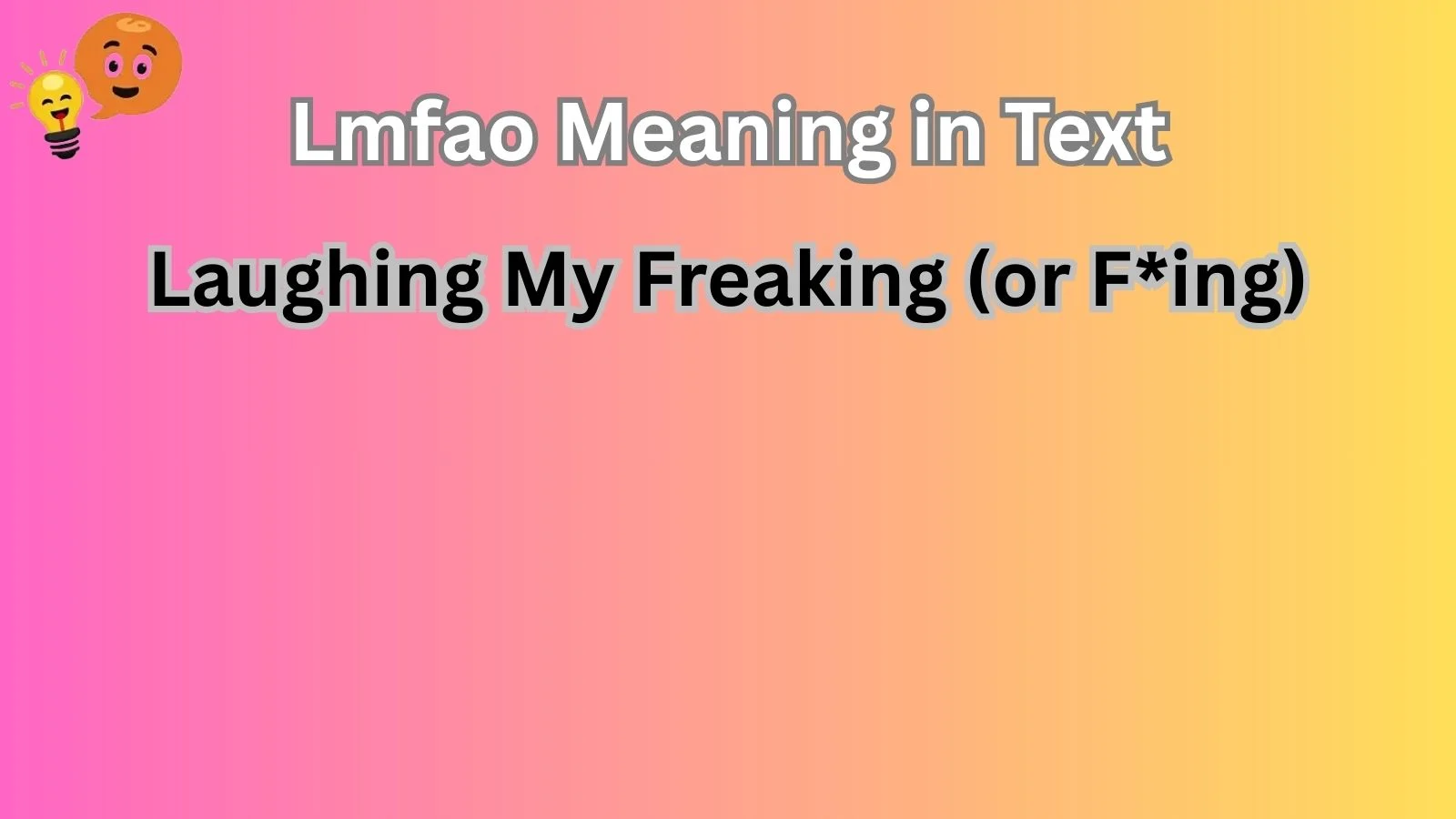
LMFAO stands for “Laughing My Freaking (or F*ing) Ass Off.”** It is an exaggerated form of laughter used in text messages, social media, and online forums to indicate something is extremely funny. While the “F” usually represents a profane word, some people replace it with a softer alternative like “freaking” to make it more socially acceptable.
Unlike simple “lol” (laughing out loud), LMFAO conveys a higher intensity of amusement. It is often used when a joke, meme, or comment is genuinely hilarious. It is informal, casual, and mostly used in personal messaging rather than professional conversations.
Background & History
The use of acronyms like LMFAO dates back to the early internet era in the 1990s, when instant messaging platforms like AOL Instant Messenger and early chat rooms popularized shorthand communication. As texting on mobile phones became common, abbreviations helped save time and characters.
LMFAO gained mainstream attention in the late 2000s, partially due to the rise of social media platforms like Facebook and Twitter. Its popularity was further boosted by the American electronic music duo named LMFAO, who released hit songs that cemented the term in pop culture. Over time, it evolved from simple text shorthand to a widely recognized expression of extreme laughter across the digital world.
Usage in Various Contexts
LMFAO is primarily used in informal contexts to show amusement. Typical scenarios include:
- Text messaging: Friends responding to jokes or funny incidents.
- Social media: Reactions to memes, viral videos, or humorous posts.
- Online gaming: Expressing laughter during gameplay or chat interactions.
- Comments & forums: To emphasize that something is extremely funny or absurd.
It is important to note that while LMFAO communicates humor, context matters. Overuse or inappropriate use in serious discussions may confuse or offend the reader.
Common Misconceptions & Clarifications
Many people mistakenly think LMFAO is just a more dramatic version of “LOL.” While both indicate laughter, LMFAO is much stronger in tone. Another misconception is that it is always inappropriate because of the implied profanity. In reality, substituting the “F” with “freaking” or using it among close friends is generally acceptable. Some may also confuse LMFAO with similar acronyms like ROFL (rolling on the floor laughing), but LMFAO emphasizes a personal reaction rather than describing physical laughter.
Similar Terms & Alternatives
If you want alternatives to LMFAO, here are some popular options:
- LOL: Laughing Out Loud – casual, general laughter.
- ROFL: Rolling On the Floor Laughing – implies extreme amusement.
- LMAO: Laughing My Ass Off – similar intensity, less emphasis than LMFAO.
- Haha / Hehe: Basic laughter expressions, informal and light.
Choosing the right term depends on the level of humor and your audience.
How to Respond to This Term
When someone texts LMFAO, responses can vary based on context:
- Agreeing with humor: “I know, right? 😂”
- Adding more humor: “LMFAO, that’s hilarious!”
- Keeping it casual: “Haha, that made me laugh too.”
Understanding tone and relationship with the sender helps craft an appropriate response.
Regional or Cultural Differences
While LMFAO is widely recognized in English-speaking countries, its usage varies globally. Some regions may prefer local equivalents, while others may adopt the acronym directly due to internet influence. Cultural sensitivity is crucial, especially since the implied profanity may not be acceptable in formal or conservative settings.
Comparison with Similar Terms
| Acronym | Intensity | Context | Notes |
|---|---|---|---|
| LOL | Low | General | Casual, universal |
| LMAO | Medium | Informal | Slightly stronger than LOL |
| LMFAO | High | Informal | Extreme laughter, sometimes offensive |
| ROFL | High | Informal | Physical laughter implied |
This comparison helps users select the most suitable expression depending on humor and audience.
Usage in Online Communities & Dating Apps
In online communities and dating apps, LMFAO often appears in messages to indicate amusement and approachability. It can break the ice or signal shared humor. However, overusing it may appear immature or insincere. Context, personality, and timing are key for making a positive impression.
Hidden or Offensive Meanings
While LMFAO is generally harmless among friends, its original phrase contains profanity. Using it in professional settings, formal chats, or with unfamiliar audiences could be inappropriate. Additionally, some users may interpret it as sarcastic or dismissive, so awareness of tone is essential.
Suitability for Professional Communication
LMFAO is not suitable for professional communication. In workplaces, formal emails, or business messaging, alternatives like “That’s funny” or “Haha” are more appropriate. Using internet slang like LMFAO may come across as unprofessional or disrespectful in formal environments.
FAQs:
What does LMFAO stand for?
It stands for “Laughing My Freaking/F***ing Ass Off,” indicating extreme laughter.
Is LMFAO appropriate for work chats?
No, it is informal and may be considered unprofessional.
Can I use LMFAO with strangers online?
Caution is advised; it can be misunderstood or seem offensive.
How is LMFAO different from LMAO?
LMFAO expresses stronger laughter intensity than LMAO.
Are there polite alternatives to LMFAO?
Yes, you can use “Haha,” “Hehe,” or “LOL” as lighter options.
Where is LMFAO most commonly used?
It’s widely used in texting, social media, online communities, and dating apps.
Conclusion:
Understanding LMFAO meaning in text is essential for navigating digital communication. It expresses intense amusement, adding humor and energy to conversations.
While popular among friends and online communities, users should be mindful of context, cultural norms, and audience to avoid misunderstandings.
By grasping its nuances, similar terms, and appropriate usage, you can communicate humor effectively without crossing social boundaries.
LMFAO reflects the evolving nature of language in the digital age, showing how creativity and shorthand can make conversations lively, expressive, and fun.

Jhool Brooks is an innovative professional recognized for blending creativity with strategic insight. With expertise in [insert industry, e.g., technology, marketing, business development], he consistently develops solutions that drive growth, efficiency, and impact. Known for his problem-solving mindset and forward-thinking approach, Jhool excels at turning challenges into opportunities. His dedication to excellence and innovation makes him a trusted leader and collaborator in every project he undertakes.