In the fast-paced world of texting and online communication, abbreviations and slang evolve rapidly.
One term that frequently puzzles people is “oop”, which has gained popularity across social media platforms, messaging apps, and online communities.
People often encounter it in casual conversations and wonder about its meaning, origin, and proper usage. Understanding what oop means in text is not only useful for decoding messages but also helps in engaging appropriately with different online audiences.
Whether you are a social media enthusiast, a teen, or someone new to digital communication, knowing this term can prevent misunderstandings and make conversations more fun and relatable.
Definition & Meaning
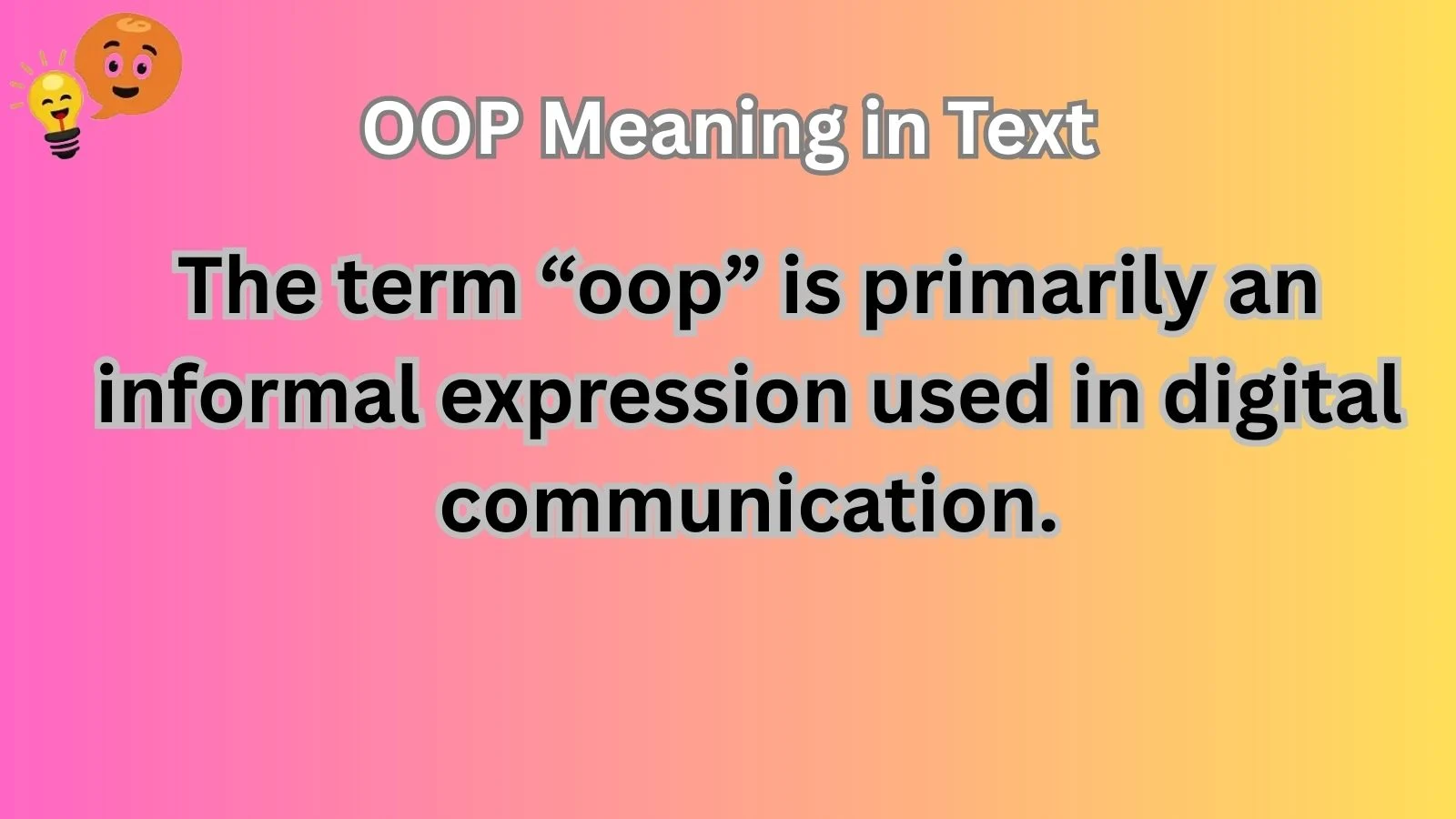
The term “oop” is primarily an informal expression used in digital communication. It is often used to convey a reaction to something unexpected, embarrassing, or surprising. Essentially, it’s a short, playful way of saying “Oops!”—a word people commonly use when a mistake occurs or when something sudden happens.
While it may seem simple, oop has a casual tone and is frequently accompanied by emojis or GIFs to emphasize the reaction. In text messaging, it functions as a versatile expression of surprise, embarrassment, or acknowledgment of a minor mistake.
For example:
- “I just spilled coffee on my desk, oop.”
- “Oop! Didn’t see you there.”
Background & History
The origin of “oop” can be traced back to the internet culture of the early 2010s, gaining traction on platforms like Tumblr, Twitter, and TikTok. It evolved from the traditional exclamation “Oops,” becoming shorter and more playful to suit the informal, rapid nature of online messaging.
The term became especially popular in meme culture and among younger generations due to its versatility and humorous undertone. Its adoption in TikTok videos and reaction posts contributed significantly to its widespread use. Over time, it transcended its literal meaning, often used in contexts that convey irony, humor, or dramatic reactions.
Usage in Various Contexts
Oop is used across a variety of online interactions, including:
- Text messages: To react to minor mistakes or funny incidents.
- Social media posts: As a casual, humorous acknowledgment of an awkward or unexpected situation.
- Gaming chats: To indicate surprise or sudden events in gameplay.
- Memes and GIF captions: To emphasize comedic timing.
Its flexibility allows users to express reactions without needing long explanations, making conversations snappy and engaging.
Common Misconceptions & Clarifications
Some people may misinterpret oop as a typo or an abbreviation for something more complex. Unlike acronyms that carry specific meanings (e.g., “BRB” or “LOL”), oop is purely an expression of surprise or mild embarrassment.
Another misconception is that it is a formal term, which it is not. Its casual nature makes it unsuitable for professional or academic settings. Understanding the context and audience is crucial to using it appropriately.
Similar Terms & Alternatives
Other expressions similar to oop include:
- “Oops” – traditional, slightly more formal.
- “Ah!” – simple exclamation of surprise.
- “Whoops” – playful acknowledgment of minor mistakes.
- “Eek” – reaction to embarrassment or fright.
Choosing the right alternative depends on the tone and platform of communication.
How to Respond to This Term
When someone uses oop in a message:
- Acknowledge their reaction: “Haha, it’s okay!”
- Respond humorously if appropriate: “Oop indeed, that was unexpected!”
- Ignore if minor: Sometimes it’s simply an expression without requiring a response.
Understanding the context ensures a smooth and natural conversation.
Regional or Cultural Differences
While oop is widely recognized in Western social media communities, its usage might be less common in regions where English digital slang is less dominant. Cultural differences in humor and communication styles can influence how it’s interpreted, sometimes causing confusion among non-native speakers.
Comparison with Similar Terms
Unlike formal abbreviations, oop conveys emotion more than information. Compared to terms like LOL or BRB, which communicate laughter or absence, oop functions as an immediate reaction, often bridging text with emotional expression.
Usage in Online Communities & Dating Apps
In online communities, oop is often used humorously or to acknowledge mistakes in posts or comments. On dating apps, it may appear in playful banter or to react to lighthearted missteps, helping to maintain a casual and approachable tone.
Hidden or Offensive Meanings
Generally, oop is harmless and non-offensive. However, some users may use it sarcastically to mock someone’s mistake. Context is key, and being aware of the tone can prevent miscommunication.
Suitability for Professional Communication
Using oop in professional emails or formal texts is inappropriate. Its informal, playful nature suits casual messaging but can appear unprofessional in work-related correspondence. Stick to more formal alternatives like “I apologize” or “My mistake” in professional settings.
FAQs:
What does oop mean in texting?
It is an informal expression used to react to something surprising, embarrassing, or unexpected.
Is oop offensive?
No, it is generally harmless, though tone can make it sarcastic.
Can I use oop professionally?
No, it is casual and should not appear in professional communications.
Where did oop originate?
It evolved from “Oops” and gained popularity on social media platforms like Tumblr and TikTok.
Is oop the same as oops?
Yes, but “oop” is shorter, more playful, and suited for online messaging.
How should I respond to oop?
Acknowledge humorously, react with a lighthearted comment, or ignore if minor.
Conclusion:
Understanding oop meaning in text helps you navigate online conversations with clarity and humor.
Its playful nature makes it a versatile term in casual communication, social media, and online communities.
While harmless and widely used, it’s important to consider context and audience to avoid miscommunication.
With this knowledge, you can confidently interpret, respond to, and even use oop appropriately in your digital interactions.

Jhool Brooks is an innovative professional recognized for blending creativity with strategic insight. With expertise in [insert industry, e.g., technology, marketing, business development], he consistently develops solutions that drive growth, efficiency, and impact. Known for his problem-solving mindset and forward-thinking approach, Jhool excels at turning challenges into opportunities. His dedication to excellence and innovation makes him a trusted leader and collaborator in every project he undertakes.