In today’s fast-paced digital world, acronyms dominate text messages, social media posts, and online chats.
One such acronym that frequently appears is IDC. But what does it really mean in text, and why do people use it so often? Understanding these abbreviations is essential for effective communication, especially in casual conversations or online interactions.
IDC is a shorthand way to express thoughts quickly, saving time and effort while texting.
Whether you’re chatting with friends, engaging on social media, or navigating dating apps, knowing the meaning of IDC ensures you interpret messages correctly and respond appropriately.
Definition & Meaning
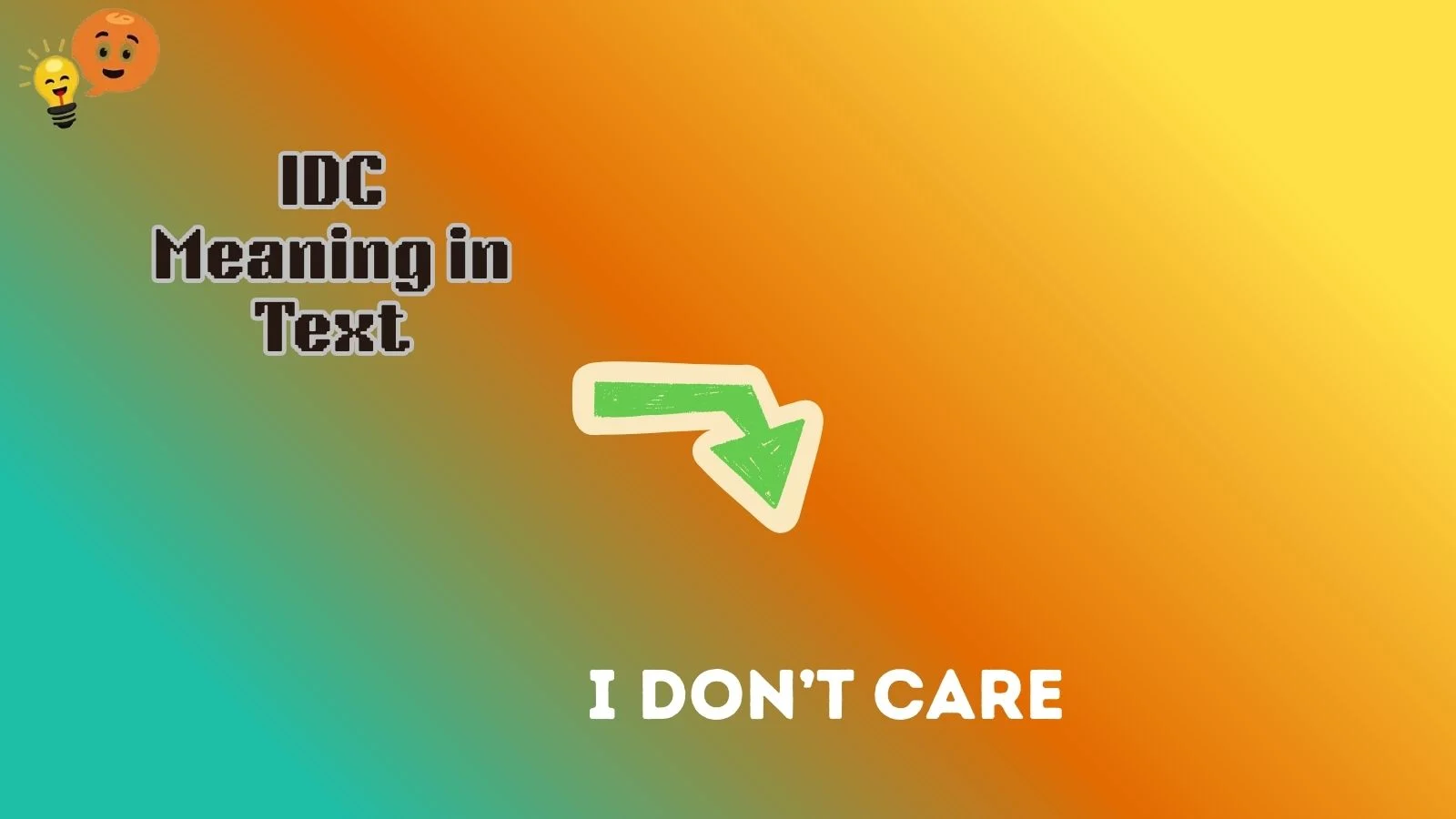
IDC stands for “I don’t care.” It is commonly used in informal texting, online messaging, and social media platforms. This acronym expresses a lack of concern, interest, or preference regarding a topic or situation. For example, if someone asks, “What movie do you want to watch?” replying with “IDC” communicates that you are indifferent and do not have a strong opinion. The tone of IDC can vary depending on context—it may be casual, neutral, humorous, or even dismissive. Unlike other acronyms that convey excitement or enthusiasm, IDC communicates emotional detachment, making it important to interpret the tone carefully to avoid misunderstandings.
Background & History
The use of abbreviations like IDC emerged with the rise of texting and instant messaging in the late 1990s and early 2000s. Early mobile phones had character limits for text messages, encouraging users to develop shortcuts. Over time, these abbreviations became widespread across online forums, chat apps, and social media platforms. IDC specifically gained popularity as digital communication shifted toward brevity and speed. Unlike formal language, these acronyms are designed to convey feelings or attitudes efficiently, reflecting modern communication patterns.
Usage in Various Contexts
IDC is versatile and can appear in several contexts:
- Casual conversations: Friends may use it to indicate indifference about plans, choices, or opinions.
- Social media comments: Users employ IDC to express detachment from trends, debates, or online discussions.
- Online gaming: Players might type IDC to signal disinterest in a particular strategy or outcome.
- Dating apps: IDC may show nonchalance or signal that someone isn’t invested in a conversation.
The meaning remains the same, but tone and perception change depending on context.
Common Misconceptions & Clarifications
A common misconception is that IDC is always rude or dismissive. While it can be perceived as blunt, tone matters. Used playfully or humorously, IDC can be neutral and non-offensive. Another misunderstanding is confusing IDC with similar acronyms like IDK (I don’t know). Unlike IDK, which shows lack of knowledge, IDC reflects emotional detachment or lack of preference.
Similar Terms & Alternatives
Alternatives to IDC include:
- Meh: Shows indifference.
- Whatever: Expresses acceptance or dismissal.
- I’m easy: Indicates flexibility or lack of preference.
These alternatives are context-sensitive and vary in tone, so choosing the right one is crucial for clear communication.
How to Respond to This Term
Responding to IDC depends on context:
- Playful context: Mirror the casual tone, e.g., “Okay, your call then!”
- Serious context: Clarify feelings to avoid misunderstandings, e.g., “Do you really not care about this?”
- Conflict situation: Consider the tone carefully, as IDC can sometimes escalate tension.
Regional or Cultural Differences
While IDC is globally recognized in English-speaking digital communities, its usage and reception may differ culturally. In some regions, expressing indifference might be seen as rude, while in others, it’s casual and acceptable. Understanding cultural nuances is important, especially in international communication.
Comparison with Similar Terms
Compared with IDK or IMO (In my opinion), IDC communicates emotional detachment rather than uncertainty or opinion. IDC focuses on feelings toward a situation rather than knowledge or belief. This distinction helps avoid miscommunication in digital conversations.
Usage in Online Communities & Dating Apps
In online communities, IDC is often used to signal neutrality in debates or discussions. In dating apps, it can indicate disinterest, nonchalance, or casual attitude. Context and tone are key—IDC may be playful, flirtatious, or dismissive depending on the situation.
Hidden or Offensive Meanings
While generally harmless, IDC can sometimes be perceived as dismissive or rude. In professional or sensitive conversations, using IDC may come across as disrespectful. Avoid using it in formal communication to maintain professionalism and clarity.
Suitability for Professional Communication
IDC is not recommended in professional settings. Emails, official chats, and workplace messages demand clear, respectful language. Using IDC may convey indifference or lack of engagement, which can harm professional relationships. Stick to formal alternatives like “I have no preference” or “I am flexible.”
FAQs:
What does IDC stand for in texting?
It stands for “I don’t care.”
Is IDC rude to use?
It can be, depending on tone and context.
Can IDC be used in professional emails?
No, it is informal and best avoided in professional communication.
How is IDC different from IDK?
IDC expresses indifference; IDK indicates lack of knowledge.
What are casual alternatives to IDC?
Meh, whatever, or “I’m easy” are common alternatives.
Where is IDC most commonly used?
It is popular in texting, social media, online communities, and dating apps.
Conclusion:
IDC is a concise, informal way to express indifference in digital communication. Understanding its meaning, context, and nuances ensures accurate interpretation and smooth interactions.
While IDC is suitable for casual chats and online communities, it is not appropriate for professional or sensitive conversations.
By recognizing alternatives, tone, and cultural considerations, you can navigate digital communication confidently, avoiding misunderstandings and maintaining clarity in every message.

Jhool Brooks is an innovative professional recognized for blending creativity with strategic insight. With expertise in [insert industry, e.g., technology, marketing, business development], he consistently develops solutions that drive growth, efficiency, and impact. Known for his problem-solving mindset and forward-thinking approach, Jhool excels at turning challenges into opportunities. His dedication to excellence and innovation makes him a trusted leader and collaborator in every project he undertakes.