In the fast-paced world of texting and online conversations, acronyms and abbreviations are everywhere.
One term that has recently gained traction is ionk. Many people encounter it on social media, messaging apps, or dating platforms and wonder what it actually means.
Understanding ionk is crucial for keeping up with modern digital communication and avoiding misunderstandings. While it may seem confusing at first, the term is often used casually in informal chats.
People search for its meaning to decode messages from friends, online acquaintances, or social media posts. .
Definition & Meaning
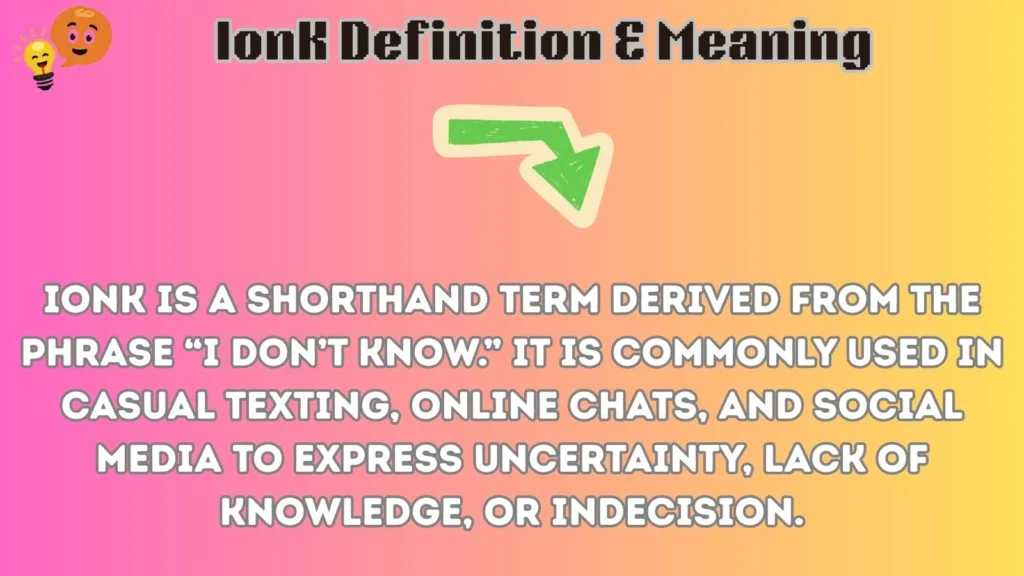
Ionk is a shorthand term derived from the phrase “I don’t know.” It is commonly used in casual texting, online chats, and social media to express uncertainty, lack of knowledge, or indecision. For example, someone might type, “Ionk if I can make it to the party tonight,” indicating they are unsure about their plans. Unlike full phrases, ionk is quick to type and widely recognized among younger audiences and frequent texters. Its meaning remains context-dependent, often interpreted based on the tone and conversation flow.
Background & History
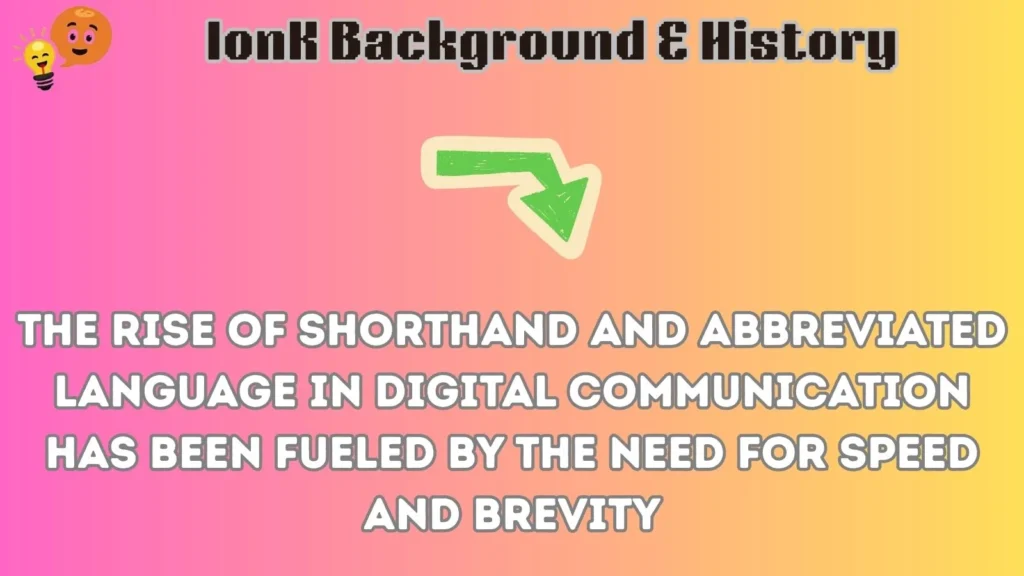
The rise of shorthand and abbreviated language in digital communication has been fueled by the need for speed and brevity. Terms like ionk emerged from texting culture and online forums, following the pattern of abbreviating common phrases for convenience. Unlike traditional slang, these abbreviations are often short-lived, evolving as internet culture changes. The use of ionk has been particularly prominent on platforms such as Twitter, Instagram, Discord, and TikTok, where quick, casual interactions dominate. Understanding its history helps contextualize why it appears in informal conversations rather than formal settings.
Usage in Various Contexts
Ionk is versatile and appears in multiple digital environments:
- Text Messaging: Often used among friends or peers when expressing uncertainty.
- Social Media Posts & Comments: Can convey casual confusion or a lack of opinion.
- Online Gaming & Forums: Players or users employ it when unsure about strategies or responses.
- Dating Apps: Users might use ionk to express hesitation or indecision regarding plans or compatibility.
It’s crucial to note that ionk is informal and typically unsuitable for professional or serious conversations.
Common Misconceptions & Clarifications
Many people confuse ionk with similar-looking terms or assume it has complex slang origins. The key clarification is that ionk is simply an abbreviation of “I don’t know.” It does not carry inherent sarcasm, humor, or offensive intent, though tone and context can change its interpretation. Avoid overcomplicating its meaning when reading messages containing ionk; usually, it’s straightforward.
Similar Terms & Alternatives
Other shorthand terms convey a similar meaning, including:
- idk – The most common abbreviation of “I don’t know.”
- dunno – Informal spelling of “don’t know.”
- no clue – Slightly more emphatic expression of uncertainty.
Ionk offers a playful or trendy alternative to these classic abbreviations, appealing to certain online communities.
How to Respond to This Term
When someone uses ionk, responses depend on context:
- Casual Chats: You can offer clarity or suggest options, e.g., “No worries, we can decide later.”
- Online Communities: Acknowledge uncertainty or provide information.
- Dating Apps: Show patience or guide the conversation, avoiding pressure.
Regional or Cultural Differences
Usage of ionk is most prevalent in English-speaking regions, especially among younger audiences familiar with internet slang. However, digital culture has globalized many abbreviations, meaning non-native English speakers might also encounter it in online interactions. Awareness of these differences ensures clear communication and prevents misunderstandings.
Comparison with Similar Terms
Compared to idk, ionk carries a slightly trendier or playful connotation. While both mean “I don’t know,” idk is universally recognized, whereas ionk signals familiarity with current online slang or youth-oriented texting habits. Using ionk may imply casualness or being “in the know” within certain social circles.
Usage in Online Communities & Dating Apps
In online communities such as Discord, Reddit, or TikTok, ionk is used to quickly indicate uncertainty without interrupting the conversation flow. On dating apps, it conveys indecision or hesitancy, often about scheduling meetups or sharing opinions. Recognizing this helps prevent misinterpretation and keeps interactions friendly and natural.
Hidden or Offensive Meanings
Generally, ionk does not carry offensive or hidden meanings. Its tone is neutral, though, like all online abbreviations, it can take on sarcasm or joking intent depending on context. Users should read the surrounding conversation carefully before reacting.
Suitability for Professional Communication
Ionk is considered informal and slang. It is not suitable for professional emails, formal messaging, or workplace communication. Stick to full expressions like “I don’t know” in professional settings to maintain clarity and professionalism.
FAQs:
What does ionk stand for?
It stands for “I don’t know,” used to express uncertainty in casual chats.
Is ionk the same as idk?
Yes, both mean “I don’t know,” but ionk is trendier and less universal.
Can ionk be offensive?
No, it is generally neutral unless used sarcastically.
Where is ionk commonly used?
It appears in social media, texting, online forums, and dating apps.
Is ionk professional?
No, it is informal and unsuitable for professional communication.
How should I respond to ionk?
Acknowledge uncertainty or provide helpful options based on the context.
Conclusion:
Understanding ionk helps navigate modern texting and online conversations confidently.
As a shorthand for “I don’t know,” it is widely used in casual chats, social media, and online communities.
While it adds a trendy, playful element to conversations, awareness of context ensures it is interpreted correctly.
By recognizing its meaning, usage, and alternatives, users can engage in smoother, more informed communication in the digital world.

Jhool Brooks is an innovative professional recognized for blending creativity with strategic insight. With expertise in [insert industry, e.g., technology, marketing, business development], he consistently develops solutions that drive growth, efficiency, and impact. Known for his problem-solving mindset and forward-thinking approach, Jhool excels at turning challenges into opportunities. His dedication to excellence and innovation makes him a trusted leader and collaborator in every project he undertakes.