In the age of instant messaging and social media, abbreviations have become a universal language.
One abbreviation that frequently puzzles people is “FB”. While it may seem simple, its meaning can vary depending on the context, platform, and audience.
Many users encounter FB in text messages, social media chats, or dating apps and wonder what it truly signifies. Understanding this term is crucial, as misinterpreting abbreviations can lead to confusion or awkward situations.
Whether you are a casual texter, a professional, or someone navigating online communities, knowing the right meaning of FB helps in interpreting conversations accurately and communicating confidently.
Definition & Meaning
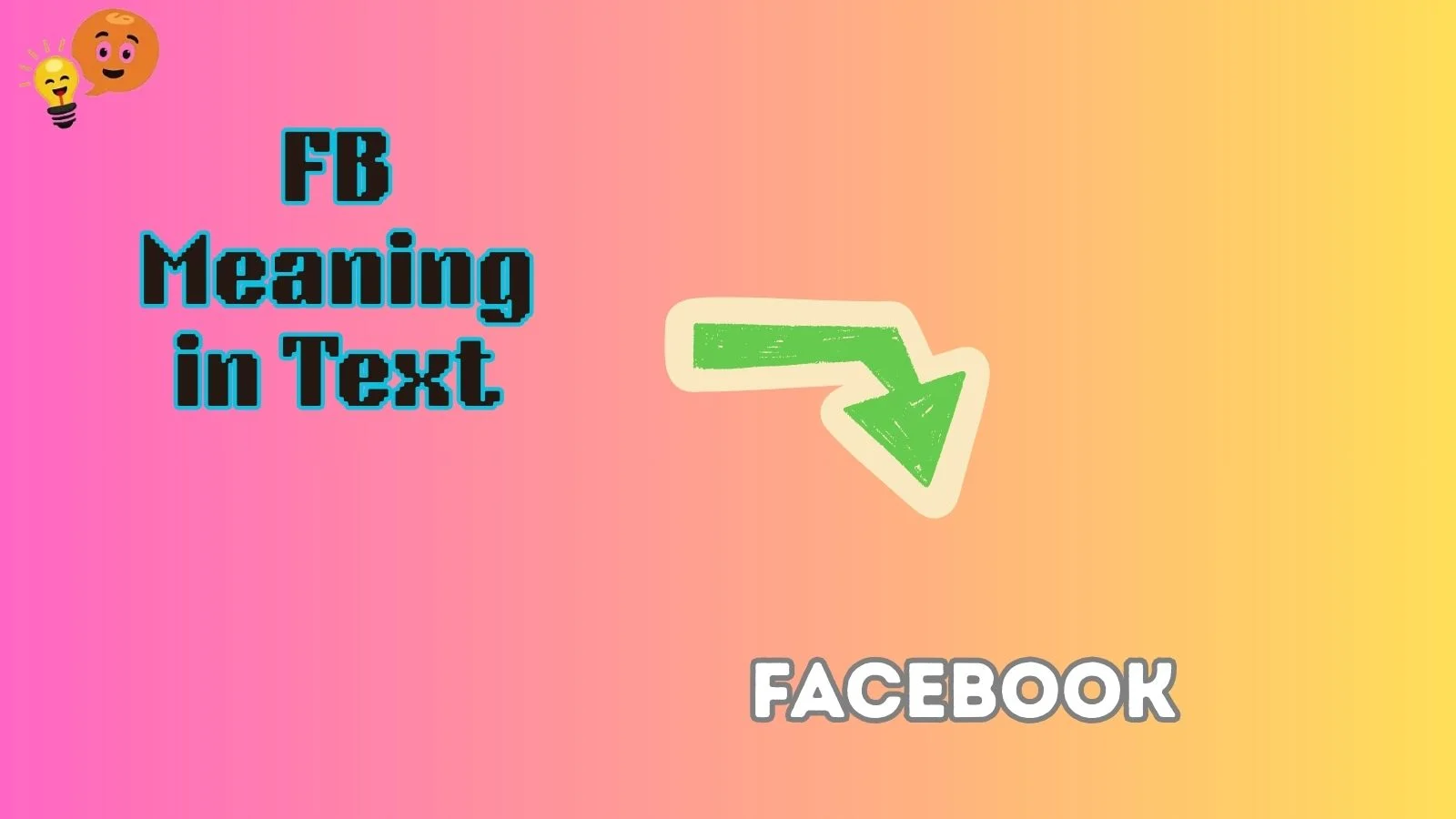
The abbreviation FB primarily stands for Facebook, the popular social media platform. In texting and online conversations, people often use FB as shorthand when referring to their Facebook account, posts, messages, or activities. For example:
- “Did you see my pic on FB?”
- “Send me the details on FB.”
While Facebook is the most common interpretation, FB can occasionally mean other things depending on the context, such as “Flashback” or “Feedback”. Correct understanding depends on the conversation, platform, and tone.
Background & History
The term FB emerged alongside the rise of Facebook in 2004. As the platform grew in popularity, users began abbreviating its name for convenience in texting and online chat. Before social media abbreviations became mainstream, people would typically write full platform names or terms. With the proliferation of smartphones and character-limited platforms like Twitter, abbreviations like FB became standard practice. Over time, FB evolved to represent not just the platform but activities related to it, such as posting updates, commenting, or messaging friends.
Usage in Various Contexts
FB appears in multiple contexts, including:
- Casual texting: “Check out the event on FB.”
- Professional communication: Discussing marketing or social media strategies.
- Gaming or apps: Referring to connecting accounts via Facebook.
- Dating apps or online communities: Asking if someone is active on FB.
Each context may slightly alter the intended meaning, but Facebook remains the central interpretation.
Common Misconceptions & Clarifications
A common mistake is assuming FB always refers to Facebook. For instance:
- FB might mean Flashback in nostalgic conversations.
- In workplace feedback scenarios, FB often stands for Feedback.
It’s important to read surrounding messages carefully to interpret FB accurately.
Similar Terms & Alternatives
Other abbreviations related to FB include:
- IG – Instagram
- TW – Twitter
- SC – Snapchat
- FBM – Facebook Messenger
These alternatives are commonly used in the same contexts as FB, especially in social media or texting lingo.
How to Respond to This Term
If someone mentions FB in a conversation:
- Clarify if unsure: “Do you mean Facebook?”
- Respond appropriately based on context: sharing a link, feedback, or agreeing with the reference.
Regional or Cultural Differences
While FB universally refers to Facebook in most countries, regional slang or platform popularity may affect interpretation. In countries where Facebook is less popular, people might not immediately recognize FB, making context even more critical.
Comparison with Similar Terms
Compared with abbreviations like IG (Instagram) or TW (Twitter), FB is one of the earliest and most recognized. Its long-standing presence makes it universally understood among social media users, whereas newer abbreviations may require clarification.
Usage in Online Communities & Dating Apps
In online communities, forums, or dating apps, users often ask for FB profiles to connect outside the platform. Examples include:
- “Let’s chat on FB for more details.”
- “Can you send me your FB?”
This highlights its role as a bridge between platforms for personal interaction.
Hidden or Offensive Meanings
While generally harmless, context is crucial. In rare cases, FB could be part of slang or inside jokes that may have hidden or offensive meanings. Always consider the conversation and relationship with the sender before assuming the meaning.
Suitability for Professional Communication
Using FB in professional communication is acceptable when referring to Facebook in marketing, networking, or project contexts. However, in formal emails or business reports, it’s better to write the full word “Facebook” to maintain professionalism.
FAQs:
What does FB mean in texting?
FB usually stands for Facebook.
Can FB mean something else?
Yes, it can also mean Feedback or Flashback depending on context.
Is it okay to use FB in work emails?
In formal emails, write Facebook fully; FB is better for informal contexts.
How do I ask someone for their FB?
You can say: “Can you share your FB profile?”
Is FB abbreviation universally understood?
Mostly yes, but in areas where Facebook is less popular, clarification may be needed.
Can FB have offensive meanings?
Rarely, but always consider context and relationship before assuming.
Conclusion:
The abbreviation FB is a versatile and widely recognized term primarily referring to Facebook.
Its meaning can shift slightly depending on context, platform, or regional usage, occasionally representing terms like Feedback or Flashback.
Understanding FB ensures smoother communication in casual chats, professional discussions, or online communities.
Whether you’re connecting with friends, networking, or exploring social media, knowing how to interpret FB confidently prevents confusion and enhances your digital literacy.

Jhool Brooks is an innovative professional recognized for blending creativity with strategic insight. With expertise in [insert industry, e.g., technology, marketing, business development], he consistently develops solutions that drive growth, efficiency, and impact. Known for his problem-solving mindset and forward-thinking approach, Jhool excels at turning challenges into opportunities. His dedication to excellence and innovation makes him a trusted leader and collaborator in every project he undertakes.