In the fast-paced world of texting, abbreviations and single-letter responses have become increasingly common.
One such term that has gained popularity is “w.” Whether you see it in a chat with friends, on social media, or in online gaming, many people wonder what “w” actually means.
This term may seem simple, but its meaning can vary depending on context, tone, and platform.
People search for the meaning of “w” to avoid miscommunication, stay relevant in digital conversations, and fully understand the subtle cues used in online communication.
Understanding “w” not only helps decode casual chats but also provides insight into the evolving language trends in digital culture.
Definition & Meaning
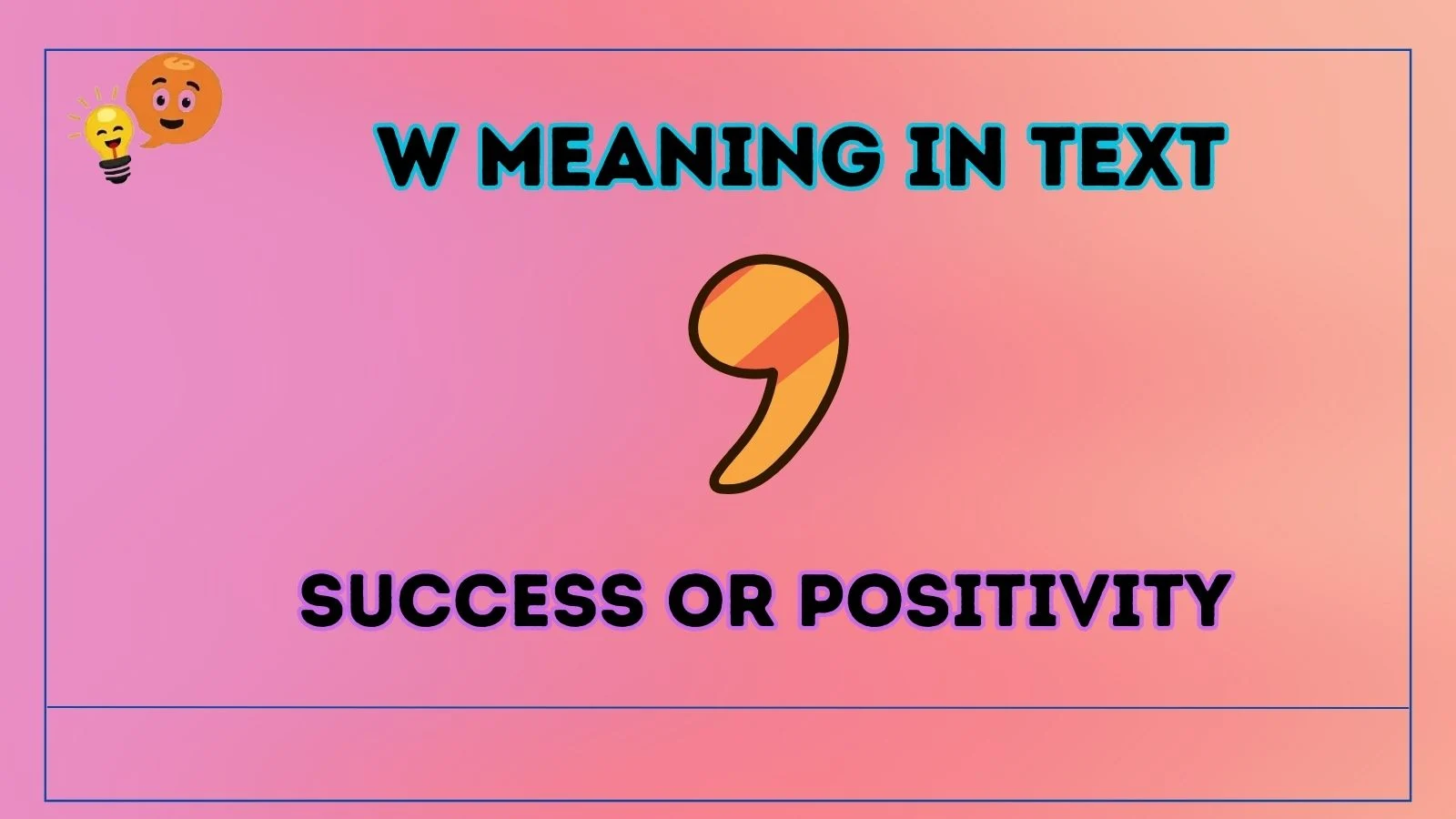
In texting and online communication, “w” is commonly used as shorthand for “win” or to indicate success or positivity. For instance, if someone says, “Got a promotion today, big w!” it implies a positive outcome or achievement. Over time, “w” has also evolved to represent agreement, approval, or acknowledgment in informal digital conversations. In essence, “w” is a versatile expression that conveys encouragement, recognition, or celebration in a concise manner. Its simplicity allows users to communicate a lot with just a single letter, making it especially popular in environments where brevity is key, such as social media, gaming chats, and instant messaging apps.
Background & History
The use of “w” can be traced back to online gaming and internet forums where shorthand and abbreviations are commonly used to save time. Gamers often used “w” to celebrate victories or successful moves, and the usage gradually spread to wider social media platforms such as Twitter, Instagram, and TikTok. Unlike traditional acronyms, “w” gained popularity because of its simplicity and flexibility—it’s quick to type and visually stands out. Over time, digital communities adopted “w” not only for literal wins but also to acknowledge achievements, affirm opinions, or highlight something impressive or notable.
Usage in Various Contexts
The meaning of “w” can vary depending on the context:
- Social Media: Often used in captions or comments to celebrate accomplishments (“Just aced my exam, w!”).
- Gaming Communities: Used to indicate victory or successful gameplay (“We got the final kill, w!”).
- Text Messaging: Can serve as an acknowledgment or agreement (“Meeting at 5 pm? W”).
- Memes & Pop Culture: Frequently appears in memes or online jokes to show approval or hype.
The versatility of “w” allows it to fit seamlessly into multiple digital scenarios, making it a staple in casual online communication.
Common Misconceptions & Clarifications
Many people assume that “w” always refers to a literal win or victory. However, it can also represent general approval, positivity, or agreement. Another misconception is that it’s a formal term—on the contrary, it’s highly informal and should not be used in professional settings. Misunderstanding “w” can sometimes lead to confusion, especially if the recipient interprets it literally rather than contextually. Recognizing the tone, conversation flow, and platform is crucial for accurately interpreting its meaning.
Similar Terms & Alternatives
Several abbreviations and shorthand terms convey a meaning similar to “w”:
- L: Often used to indicate a loss or failure, sometimes paired with “w” in contrast.
- GG: Short for “good game,” used in gaming to show sportsmanship.
- Win: The full word, sometimes written for clarity.
- Thumbs-up emoji (👍): Non-verbal alternative to express agreement or approval.
These alternatives vary in formality and context but can convey similar sentiments depending on the conversation.
How to Respond to This Term
When someone uses “w” in a conversation, appropriate responses depend on the context:
- Acknowledgment: Respond with another “w,” emoji, or congratulatory message.
- Humor: Use playful reactions if the “w” is part of a joke or meme.
- Casual Agreement: Simply respond with agreement or support if it’s used to validate a statement.
Understanding the context ensures your response aligns with the intended tone.
Regional or Cultural Differences
While “w” is widely used in English-speaking digital communities, its interpretation may vary in different regions. For example, international social media users might associate “w” primarily with winning in gaming, while in other contexts, it may be perceived as a general approval symbol. Awareness of cultural nuances is essential for avoiding misunderstandings, especially in global online communities.
Comparison with Similar Terms
Compared to longer phrases like “congratulations” or “good job,” “w” is concise and casual. Unlike emojis, which rely on visual representation, “w” is text-based and easy to type on any device. It also differs from acronyms like “GG” because it is not exclusively tied to gaming—it has broader digital relevance. This brevity and versatility make it a unique addition to online communication lexicons.
Usage in Online Communities & Dating Apps
“w” frequently appears in online communities and dating apps:
- In online forums: Often used to support someone’s achievement or opinion.
- On dating apps: Could indicate approval, interest, or acknowledgment of a message.
Its casual nature makes it ideal for informal digital spaces where quick responses are valued.
Hidden or Offensive Meanings
Generally, “w” is neutral and positive, with no offensive connotations. However, context matters: using it sarcastically or in a competitive situation could imply mockery or passive-aggressiveness. Always consider the tone and platform to ensure your usage is interpreted correctly.
Suitability for Professional Communication
“w” is not suitable for formal or professional communication. Its informal tone, single-letter format, and reliance on contextual understanding make it inappropriate for emails, official messaging, or workplace reports. Stick to full words or more formal expressions when communicating in professional environments.
FAQs:
What does “w” mean in texting?
It usually stands for “win” or expresses positivity, agreement, or approval.
Can “w” be negative?
Not inherently, but sarcastic use might imply the opposite of approval.
Is “w” used in professional messages?
No, it’s informal and should be avoided in workplace communication.
Is “w” only for gaming?
No, it originated in gaming but now spans social media, texting, and memes.
How do I respond to “w”?
You can reply with another “w,” emoji, or a message showing agreement or support.
Are there alternatives to “w”?
Yes, alternatives include GG, L, win, or thumbs-up emoji (👍).
Conclusion:
The term “w” has become an integral part of modern digital communication.
From celebrating victories to expressing agreement, it is a versatile shorthand that resonates across gaming, social media, and casual texting. While simple, understanding its nuances ensures accurate interpretation and appropriate usage.
By recognizing the context, cultural variations, and conversational tone, users can navigate online interactions effectively while staying current with evolving digital language trends.
Whether you’re acknowledging a friend’s success or joining in on internet humor, knowing how to use “w” keeps your communication sharp, relevant, and effortlessly modern.

Root Pierce is a results-driven professional known for combining strategic insight with innovative thinking. With extensive experience in [insert industry, e.g., technology, business strategy, or marketing], Root specializes in developing solutions that drive growth, efficiency, and measurable impact. Renowned for a problem-solving mindset and collaborative approach, Root brings clarity, focus, and leadership to every project. His dedication to excellence, attention to detail, and forward-thinking strategies make him a trusted partner and influencer in professional environments.