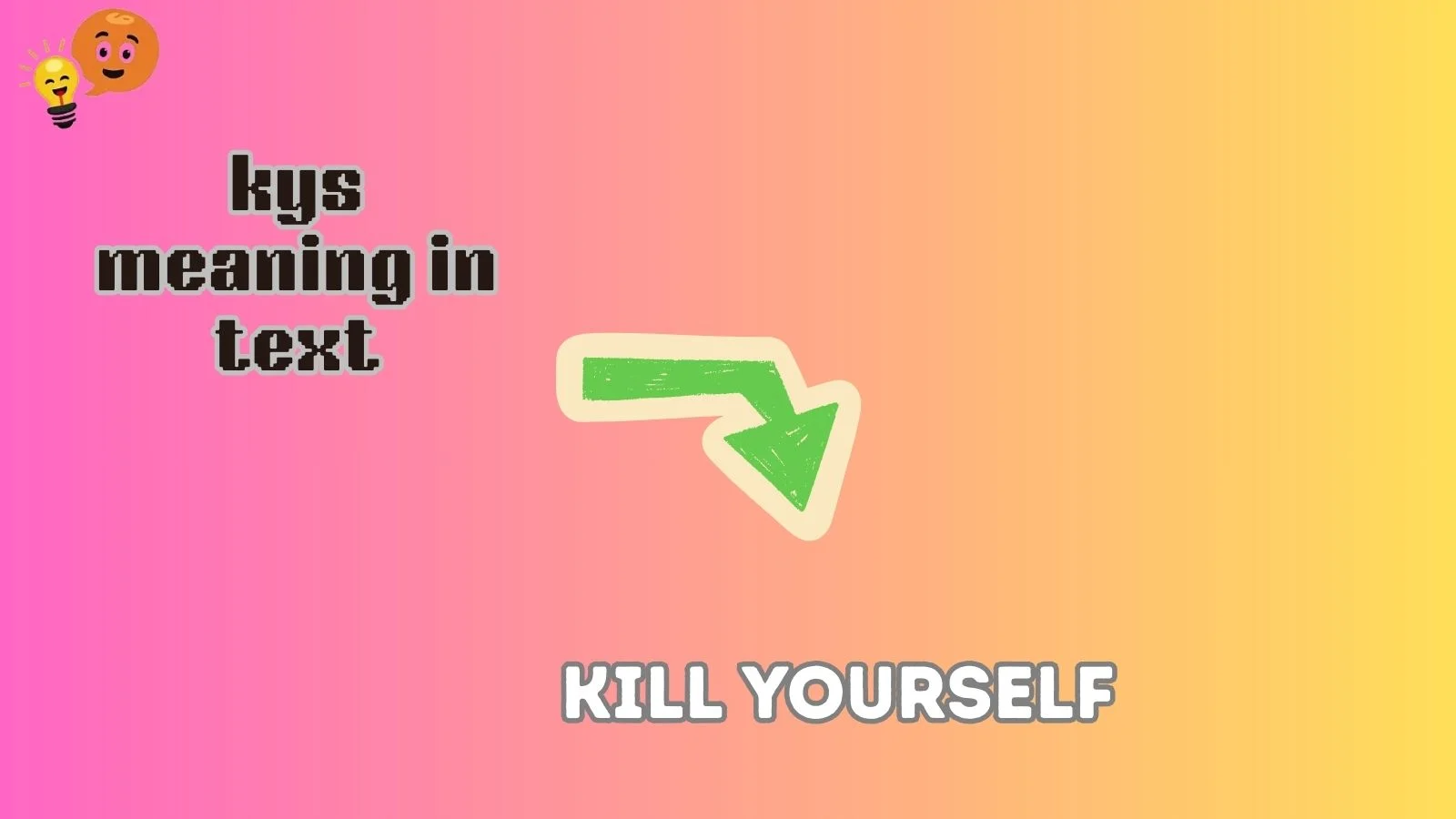
The phrase kys meaning in text is something many people search for after encountering it online or in messages and feeling confused or concerned.
Short slang terms spread quickly through social media, gaming chats, and messaging apps, often without clear context. While some abbreviations are harmless, others carry serious emotional weight. “KYS” is one such term that can be shocking, offensive, or distressing, especially for those seeing it for the first time.
People want to understand what it means, where it comes from, and how it is typically used so they can react appropriately.
Understanding this term is important not only for digital literacy but also for online safety and respectful communication.
Definition & Meaning
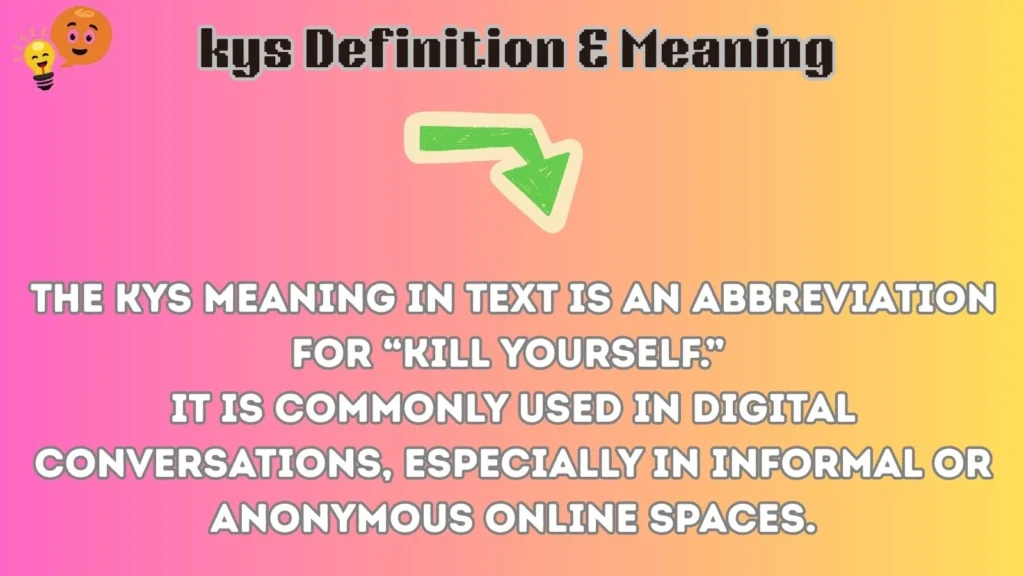
The kys meaning in text is an abbreviation for “kill yourself.” It is commonly used in digital conversations, especially in informal or anonymous online spaces. The phrase is almost always considered offensive and harmful because it directly references self-harm and suicide.
In most cases, it is used as an insult, a form of harassment, or an attempt to shock or hurt someone emotionally. Even when said “as a joke,” the wording carries serious implications and can negatively affect mental health. Unlike playful slang, this term does not have a neutral or positive definition.
Some users wrongly assume it is just another edgy phrase, but its literal meaning makes it particularly dangerous. Because of this, many platforms flag or ban its usage, and it is widely discouraged in responsible online communication.
Background & History

The term gained visibility alongside the rise of online forums, multiplayer gaming, and anonymous chat platforms. As internet culture became more competitive and confrontational, extreme phrases were often used to provoke reactions or assert dominance.
“KYS” started appearing frequently in gaming lobbies, comment sections, and message boards where moderation was minimal. Over time, it became a shorthand insult, spread through memes and screenshots, and normalized in certain toxic communities.
However, increased awareness of mental health issues led to public backlash. Campaigns against cyberbullying highlighted how phrases like this could cause real harm. As a result, many platforms introduced stricter rules, filters, and penalties to reduce its use.
Usage in Various Contexts
The kys meaning in text can vary slightly depending on context, but it is almost always negative.
- Gaming: Used as trash talk or harassment after losing or winning.
- Social Media: Appears in comment sections as trolling or bullying.
- Private Messages: Sometimes sent during heated arguments.
- Group Chats: Occasionally used “ironically,” though still harmful.
Even when users claim they “didn’t mean it seriously,” the phrase can still deeply affect recipients. Context may change intent, but it does not remove the potential harm.
Common Misconceptions & Clarifications
A common misconception is that “kys” is just dark humor or harmless slang. In reality, its literal meaning cannot be separated from the phrase itself.
Another misunderstanding is that it is acceptable among friends. While some friend groups tolerate extreme jokes, using this phrase risks normalizing language that can hurt others who may be struggling silently.
It is also incorrect to assume everyone understands it the same way. Cultural background, age, and personal experiences greatly influence how the term is received.
Similar Terms & Alternatives
There are other online insults or phrases used to dismiss or mock people, but most do not reference self-harm. Examples include generic insults or sarcasm-based slang.
Healthier alternatives include:
- Muting or blocking instead of responding
- Using non-harmful humor
- Expressing disagreement without personal attacks
Choosing safer language helps keep conversations respectful and inclusive.
How to Respond to This Term
If you receive this message, the best response depends on the situation:
- Ignore or block if it’s from a stranger or troll
- Report it on platforms that allow moderation
- Address it calmly if it comes from someone you know
- Seek support if it affects your mental well-being
You are never obligated to engage with abusive language.
Regional or Cultural Differences
While the phrase is understood globally in English-speaking spaces, its impact can vary. In regions with strong mental health awareness, it is taken very seriously. In other places, some users may not fully grasp its severity, especially non-native English speakers.
Despite these differences, global platforms increasingly treat it as unacceptable language.
Comparison with Similar Terms
Compared to standard insults, “kys” stands out because it directly references death and self-harm. This makes it more severe than common name-calling or sarcasm.
Most platforms classify it closer to hate speech or harassment rather than casual slang, which is why it often triggers automatic moderation.
Usage in Online Communities & Dating Apps
In online communities, especially gaming or meme spaces, the term may appear more frequently. Dating apps, however, usually enforce stricter rules, and using such language can result in immediate bans.
Because dating platforms involve personal vulnerability, this phrase is particularly inappropriate and alarming in that context.
Hidden or Offensive Meanings
There is no truly “hidden” positive meaning behind this term. Any attempt to soften it usually ignores its literal message. Its offensiveness lies in both its wording and its potential psychological impact.
Suitability for Professional Communication
The kys meaning in text makes it completely unsuitable for professional, academic, or workplace communication. Using it in any formal environment can lead to serious consequences, including disciplinary action or termination.
Professional communication should always prioritize respect, clarity, and emotional safety.
FAQs:
What does “kys” stand for in texting?
It stands for “kill yourself,” a phrase widely considered offensive and harmful.
Is “kys” ever meant as a joke?
Some claim it is joking, but it still carries serious and hurtful implications.
Can using “kys” get you banned online?
Yes, many platforms ban or penalize users for using this phrase.
Why is “kys” considered dangerous language?
It references self-harm and can negatively impact mental health.
Should you respond if someone texts you “kys”?
Often it’s better to ignore, block, or report rather than engage.
Is it appropriate to use among friends?
Even among friends, it’s risky and generally discouraged.
Conclusion:
Understanding the kys meaning in text is essential for navigating modern digital communication responsibly.
While it may appear as just another internet abbreviation, its literal meaning and emotional impact make it one of the most harmful slang terms online.
Awareness helps people avoid using it casually, recognize cyberbullying, and respond in healthier ways. Promoting respectful language creates safer online spaces for everyone.

Jhool Brooks is an innovative professional recognized for blending creativity with strategic insight. With expertise in [insert industry, e.g., technology, marketing, business development], he consistently develops solutions that drive growth, efficiency, and impact. Known for his problem-solving mindset and forward-thinking approach, Jhool excels at turning challenges into opportunities. His dedication to excellence and innovation makes him a trusted leader and collaborator in every project he undertakes.