In the digital age, acronyms and shorthand dominate online conversations, text messages, and social media interactions.
One such term that has gained popularity is “ONG”. People often stumble upon it in casual chats, TikTok captions, Instagram comments, or even on dating apps, prompting curiosity about its meaning.
Understanding ONG meaning in text can help you interpret messages more accurately, respond appropriately, and avoid miscommunication.
While some abbreviations are universally recognized, others, like ONG, can vary slightly depending on context, culture, or online platform.
Definition & Meaning
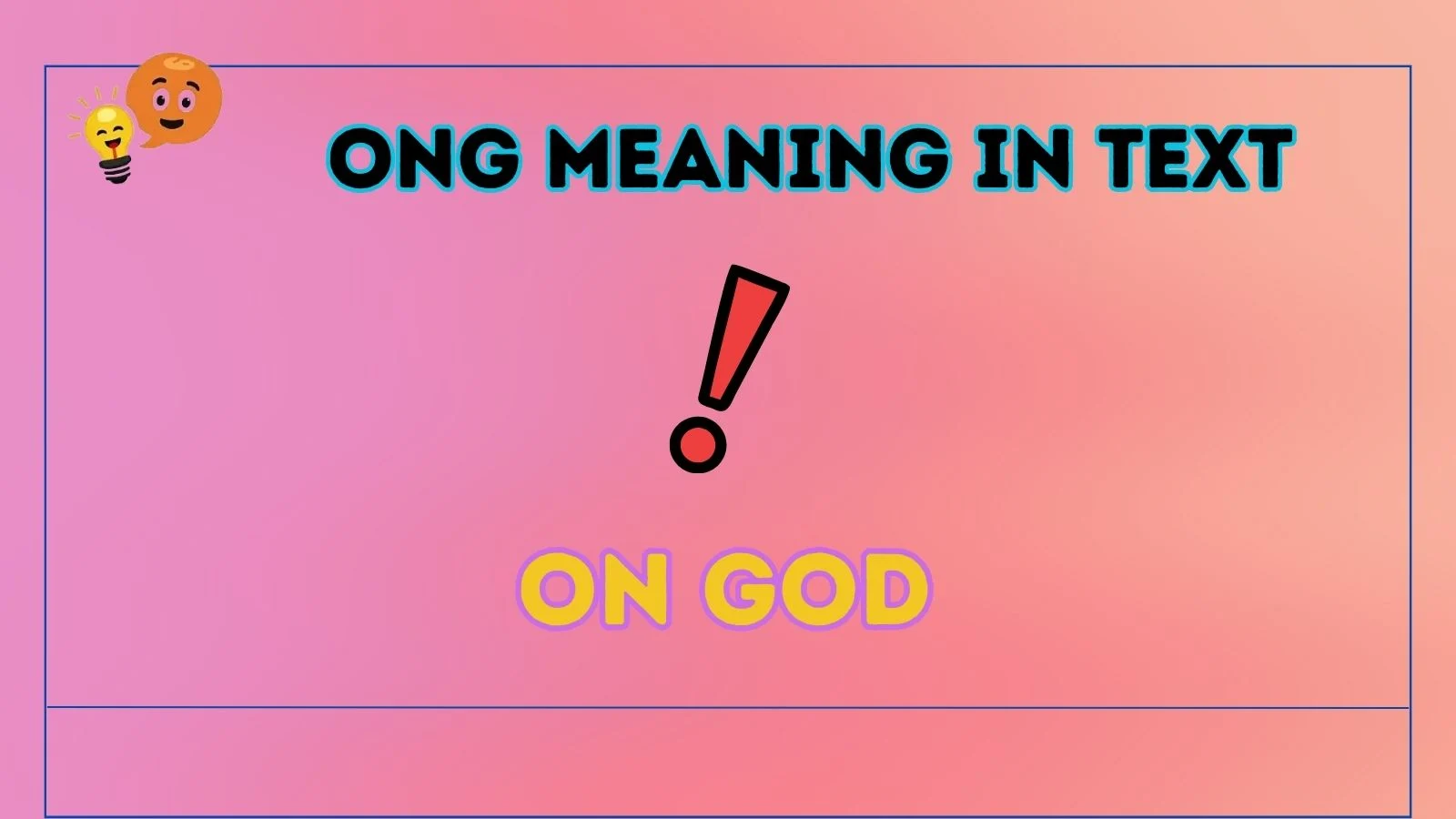
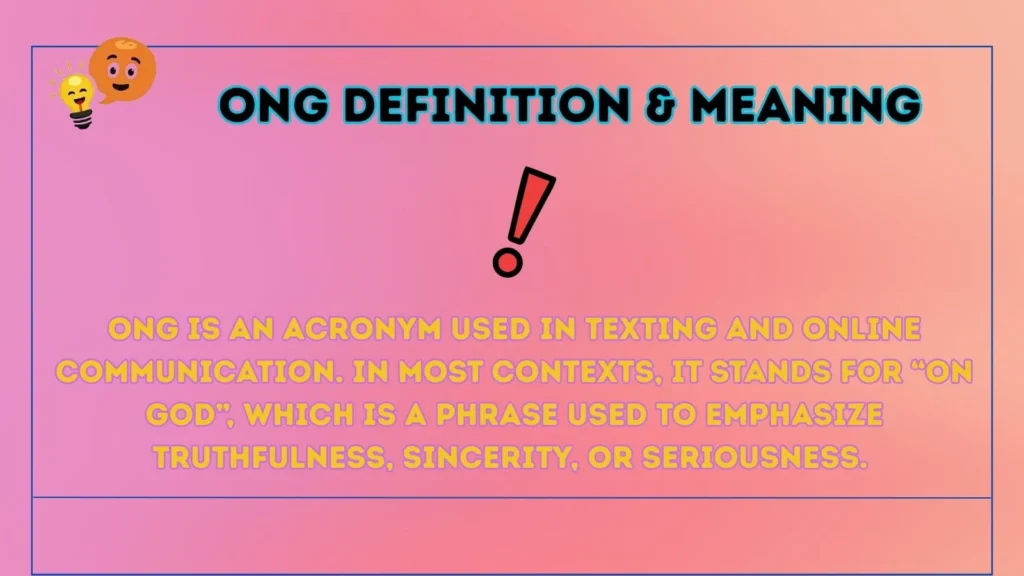
ONG is an acronym used in texting and online communication. In most contexts, it stands for “On God”, which is a phrase used to emphasize truthfulness, sincerity, or seriousness. Essentially, when someone types ONG, they are asserting that what they are saying is 100% genuine or honest.
Example in text:
- “I didn’t take your charger, ONG.”
Here, the sender is assuring the recipient of their honesty.
The term is informal, commonly used among younger demographics, and often appears in casual online conversations, memes, or social media captions.
Background & History
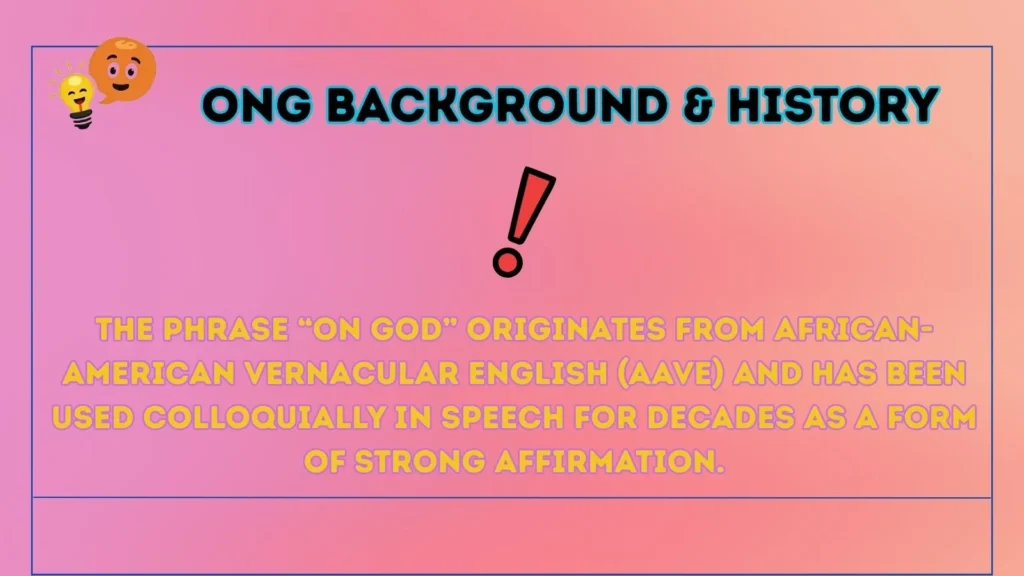
With the rise of social media and texting, it naturally evolved into the shorthand “ONG”. Platforms like Twitter, Instagram, Snapchat, and TikTok accelerated its spread, especially among Gen Z users who favor brevity. The abbreviation gained mainstream popularity through viral content, online memes, and influencers incorporating it into captions and dialogue. Over time, it transitioned from spoken slang to widely recognized online shorthand.
Usage in Various Contexts
ONG is versatile and context-dependent. Some common contexts include:
- Casual Texting: Emphasizing honesty in conversations with friends.
- “I finished all the cookies, ONG.”
- Social Media Posts: Expressing strong emotions, like agreement or excitement.
- “This concert was amazing, ONG!”
- Gaming Communities: Gamers use ONG to stress that their statements or gameplay achievements are true.
- “I just got a legendary drop, ONG!”
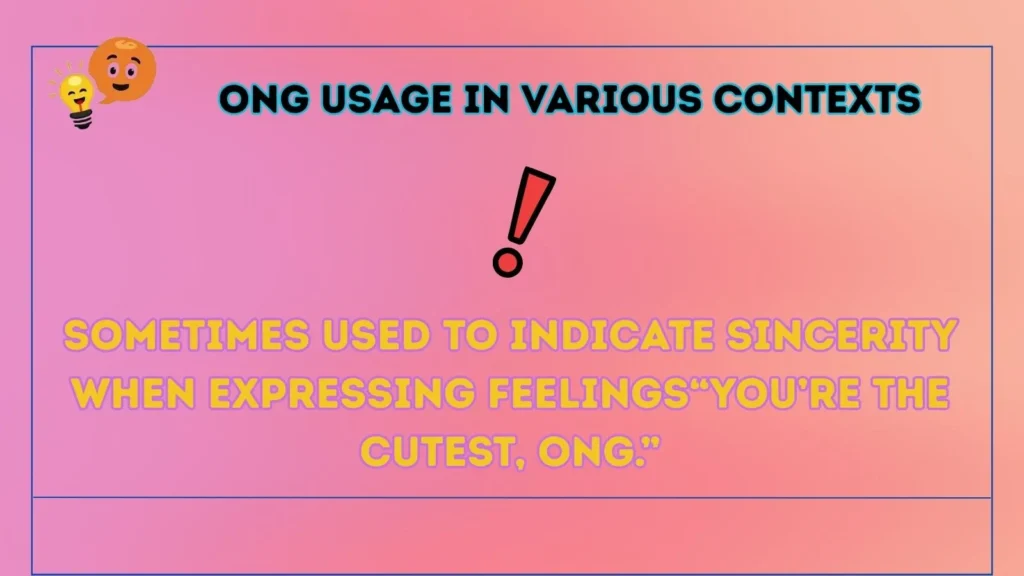
- Dating Apps: Sometimes used to indicate sincerity when expressing feelings.
- “You’re the cutest, ONG.”
Common Misconceptions & Clarifications
Many newcomers to internet slang misinterpret ONG. Common misconceptions include:
- Thinking it’s offensive: ONG is not inherently rude or offensive.
- Assuming it’s an organization abbreviation: Some confuse it with “NGO” (non-governmental organization).
- Literal religious interpretation: While “On God” mentions God, most users don’t use it in a formal religious sense—it’s more about sincerity.
Similar Terms & Alternatives
Several slang terms share a similar purpose with ONG, including:
- TBH – To be honest
- FR – For real
- IDK – I don’t know (used less for affirmation, more for uncertainty)
- No Cap – Another AAVE-derived term meaning “no lie”
These alternatives are often interchangeable depending on context and platform.
How to Respond to This Term
Responding to ONG depends on context:
- Agreement: “Same, ONG!”
- Acknowledgment: “Got it, ONG.”
- Playful reply: “ONG? I don’t believe you!”
The key is to match the casual tone and keep responses friendly.
Regional or Cultural Differences
While ONG originated in the United States within AAVE communities, it has spread globally through social media. International users may recognize it but sometimes associate it with different meanings, like abbreviating an organization name in formal contexts. Its understanding tends to be strongest among English-speaking youth and online communities familiar with American slang.
Comparison with Similar Terms
Unlike TBH or No Cap, which can sometimes carry neutral or playful connotations, ONG specifically emphasizes honesty and truthfulness. No Cap and ONG are often used interchangeably among Gen Z, but ONG slightly leans toward serious affirmation, whereas No Cap can be lighter or humorous.
Usage in Online Communities & Dating Apps
ONG is frequently seen in platforms where brevity and slang thrive:
- TikTok: Comment sections often contain ONG to express agreement.
- Snapchat/Instagram Stories: Used to show authenticity in captions.
- Dating Apps: Adds casual sincerity when expressing feelings or intentions.
Its presence on dating apps is particularly notable because it conveys honesty in an informal, relatable way.
Hidden or Offensive Meanings
Generally, ONG has no hidden or offensive meaning. The only caution is in professional or formal contexts where its casual nature might be inappropriate. Overuse in serious discussions could be misunderstood as unprofessional or immature.
Suitability for Professional Communication
ONG is not suitable for professional or formal communication. It is best reserved for casual conversations with friends, social media, or peer-to-peer texting. In professional emails or workplace chat, alternatives like “I assure you” or “honestly” are recommended.
FAQs:
What does ONG stand for?
It stands for “On God”, used to emphasize truth or sincerity.
Is ONG offensive?
No, it’s informal but not offensive.
Can I use ONG at work?
It’s not suitable for professional communication.
Is ONG the same as No Cap?
They are similar; both stress honesty, but ONG is slightly more serious.
Who uses ONG the most?
Primarily Gen Z and social media users globally.
Conclusion:
Understanding ONG meaning in text equips you to navigate modern digital conversations with clarity. It highlights honesty, sincerity, and a casual affirmation that resonates especially with younger generations.
While its roots lie in AAVE, ONG’s rise through social media has made it a global shorthand for truthfulness.
Whether you encounter it in a TikTok comment, dating app chat, or meme, knowing its context helps avoid misinterpretation and keeps your responses authentic.
Though not appropriate for formal or professional settings, it remains a playful and meaningful tool in everyday digital language.

James Hayes is a versatile and results-oriented professional with a proven track record of blending creativity with strategy. With experience in [insert industry, e.g., technology, marketing, business development], James excels at turning complex challenges into innovative solutions that drive growth and impact. Known for his analytical mindset and collaborative approach, James brings clarity, focus, and efficiency to every project he undertakes. His dedication to excellence and attention to detail make him a trusted partner and leader, capable of inspiring teams and achieving measurable success.