In today’s fast-paced digital world, acronyms and abbreviations dominate our texting and online communication.
One such popular term is TGIF, frequently seen in texts, social media posts, and casual chats. But what exactly does it mean, and why do people use it so often?
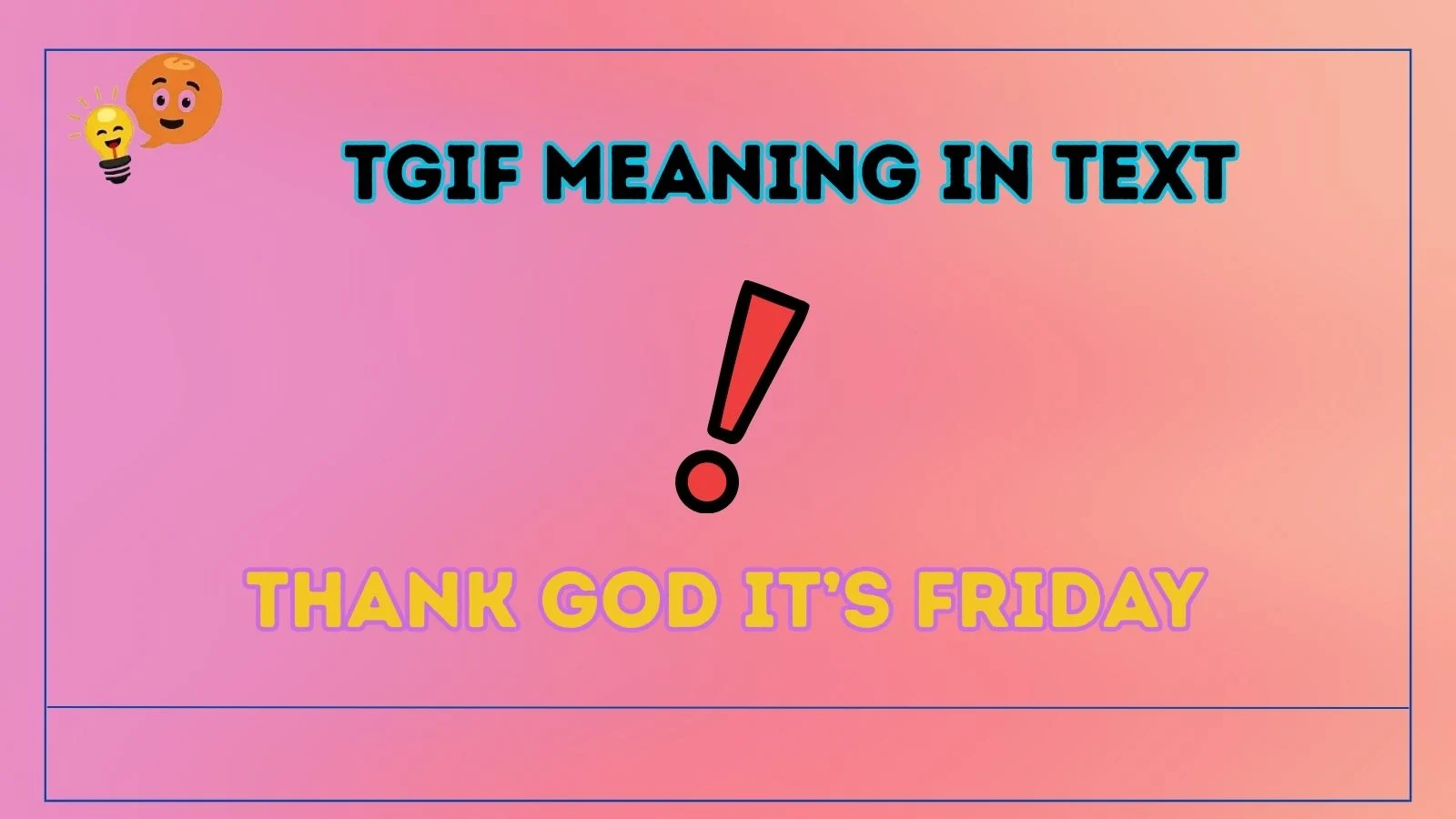
For many, TGIF meaning in text is a shorthand expression of relief and excitement that the workweek is over and the weekend has arrived. This acronym captures a universal sentiment, making it highly relatable.
Understanding its meaning and usage can help you communicate more effectively and stay up to date with digital lingo.
Whether you’re a student, professional, or casual texter, learning about TGIF can help you navigate conversations online and avoid misunderstandings.
Definition & Meaning
TGIF stands for “Thank God It’s Friday.” It is commonly used to express joy, relief, or anticipation for the weekend after a busy workweek or school week. In text messages, it often appears alongside emojis such as 🎉, 😎, or 🍹 to emphasize celebration and relaxation. While primarily used in casual conversations, TGIF can also convey excitement for upcoming events, personal plans, or social gatherings. Its meaning is simple yet universally understood: a short, fun way to acknowledge the end of the week and the start of leisure time.
Background & History
The phrase “Thank God It’s Friday” has been around for decades, long before the internet or smartphones. It originated in the United States as a cultural expression highlighting the relief of completing a workweek. TGIF gained mainstream popularity in the 1970s and 1980s through media, television, and eventually as a restaurant and entertainment brand. With the rise of digital communication, the acronym TGIF became a staple in text messages, chat rooms, and social media posts, allowing people to convey the sentiment quickly without typing the full phrase.
Usage in Various Contexts
TGIF can be used in multiple contexts, including:
- Personal texts: “TGIF! Time to relax and binge-watch my favorite show.”
- Workplace chats: Light-hearted messages to colleagues at the end of the week: “TGIF, everyone! Let’s wrap up the tasks.”
- Social media captions: Often paired with weekend-related photos or events.
- Event reminders: Announcing parties, meetups, or casual gatherings on Fridays.
Its versatility makes it popular across age groups, professions, and cultural settings.
Common Misconceptions & Clarifications
While most people use TGIF as a celebratory term, some may misinterpret it as a religious statement due to the word “God.” In reality, it’s mostly secular and serves as an expression of relief rather than devotion. Another misconception is using TGIF on days other than Friday; doing so may confuse readers and reduce its impact. It’s essential to understand the context to ensure the acronym is appropriate and understood correctly.
Similar Terms & Alternatives
Several alternatives to TGIF exist, depending on tone and context:
- Thank Goodness It’s Friday – A milder, secular variation.
- Finally Friday! – Expresses excitement without religious connotations.
- Friday Vibes – Often used on social media to convey weekend mood.
- Weekend Mood – Another informal way to show Friday excitement.
These alternatives are useful for diversifying language in texts and online communication.
How to Respond to This Term
Responding to TGIF can be as casual and fun as using it:
- “Yes! Weekend time!”
- “Can’t wait to relax.”
- “TGIF indeed, let’s celebrate!”
- “Finally, some me-time!”
Responses often mirror the enthusiasm and playful tone of the original message.
Regional or Cultural Differences
While TGIF originated in Western culture, it has become widely recognized globally due to internet communication. However, in countries where the workweek differs (e.g., Sunday–Thursday), TGIF may not carry the same resonance. Cultural attitudes toward leisure and weekends also influence how and when people use this acronym. Understanding these nuances ensures proper communication in international contexts.
Comparison with Similar Terms
TGIF can be compared with other weekday-related acronyms like:
- MWMF – Monday, Wednesday, Monday, Friday (less common).
- TGIM – Thank God It’s Monday, used ironically or for motivation.
TGIF stands out because it evokes genuine excitement for a break rather than sarcasm or irony.
Usage in Online Communities & Dating Apps
TGIF is widely used in online forums, chat apps, and dating platforms to convey lightheartedness. On dating apps, it can function as an icebreaker or conversation starter: “TGIF! Any fun weekend plans?” In gaming communities or social networks, it’s often paired with memes, GIFs, or emoji for humorous effect.
Hidden or Offensive Meanings
TGIF is generally harmless and positive. However, occasional misuse may appear in satirical or ironic posts, but such cases are rare. There are no inherently offensive interpretations associated with TGIF, making it safe for casual use.
Suitability for Professional Communication
While TGIF is widely accepted in informal workplace chats, email signatures, or casual memos, it may not suit formal communications with clients, senior executives, or official reports. Assess the tone and audience before using it professionally.
FAQs:
What does TGIF stand for?
It stands for “Thank God It’s Friday.”
Can TGIF be used in emails?
Yes, but best for casual or internal workplace emails.
Is TGIF religious?
Not necessarily; it’s mostly a secular expression.
When did TGIF become popular?
It gained mainstream use in the 1970s–1980s and later in digital communication.
Are there alternatives to TGIF?
Yes, phrases like “Finally Friday” or “Friday vibes” are common alternatives.
Can TGIF be misunderstood?
Sometimes, especially outside Friday or in cultures with different workweeks.
Conclusion:
Understanding TGIF meaning in text helps decode one of the most popular acronyms in digital communication.
Its simplicity, positivity, and universal appeal make it a favorite among texters, social media users, and online communities.
By knowing how to use it correctly, exploring alternatives, and recognizing cultural nuances, you can communicate effectively and join the global chorus of Friday celebration.
TGIF is more than an abbreviation—it’s a small reminder to embrace leisure, unwind, and enjoy life.

Root Pierce is a results-driven professional known for combining strategic insight with innovative thinking. With extensive experience in [insert industry, e.g., technology, business strategy, or marketing], Root specializes in developing solutions that drive growth, efficiency, and measurable impact. Renowned for a problem-solving mindset and collaborative approach, Root brings clarity, focus, and leadership to every project. His dedication to excellence, attention to detail, and forward-thinking strategies make him a trusted partner and influencer in professional environments.