The internet and texting culture have given rise to countless abbreviations, making digital communication faster and more casual.
One such term that often confuses readers is wtv. Many people come across it in chats, comments, or social media posts and immediately search to understand its intent.
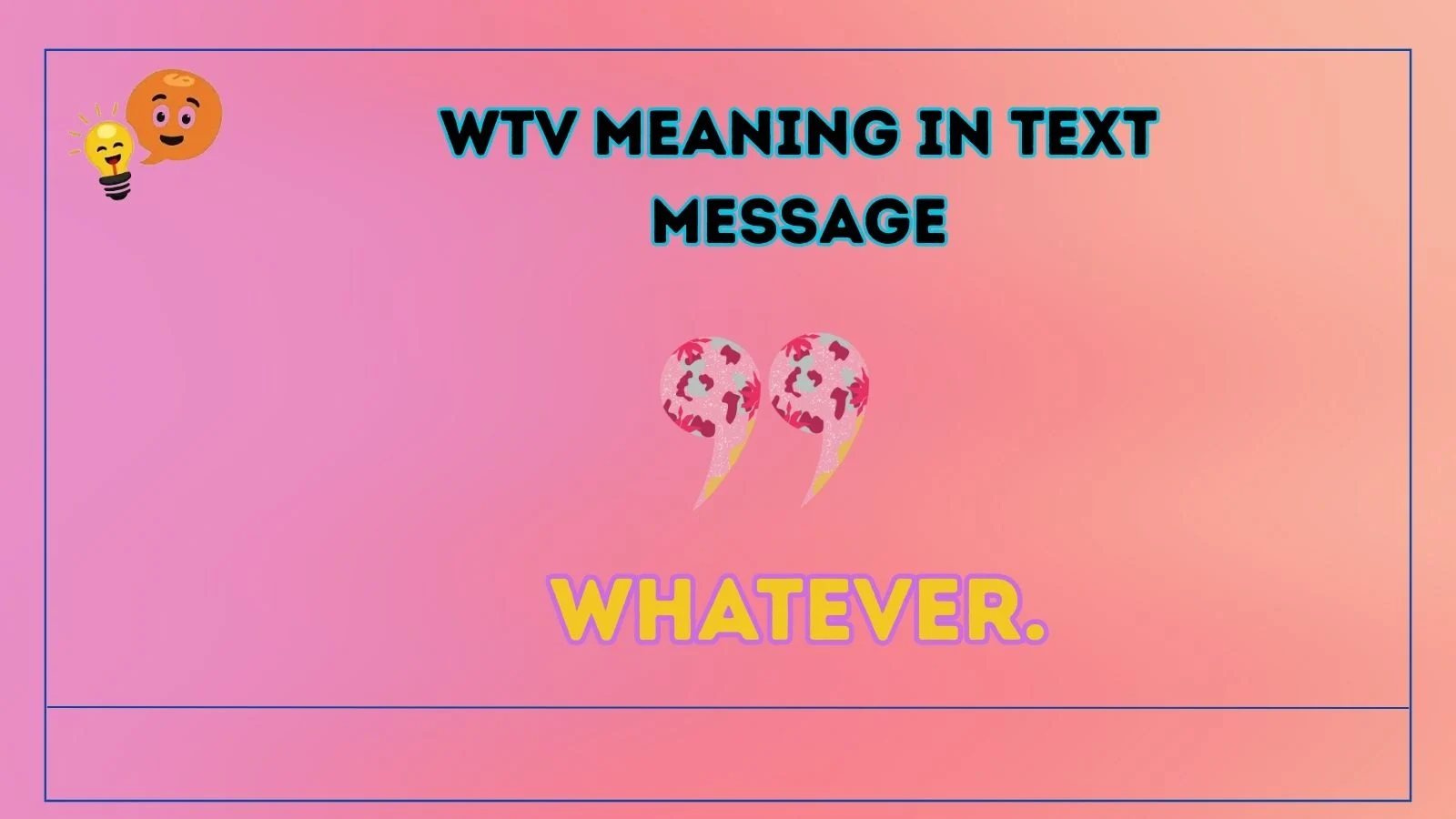
The wtv meaning in text message can vary slightly depending on tone, context, and relationship between speakers, which is why it sparks curiosity. Sometimes it feels dismissive, other times relaxed or playful.
Understanding what it truly means helps avoid misunderstandings and improves communication, especially in informal conversations.
As texting language continues to evolve, knowing common abbreviations like this allows you to respond appropriately and read between the lines.
Definition & Meaning
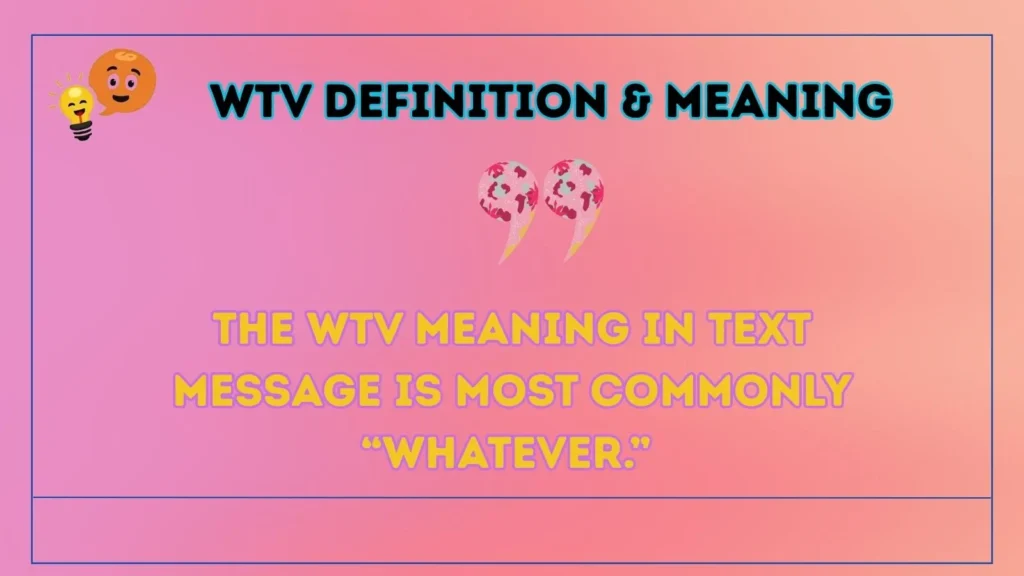
The wtv meaning in text message is most commonly “whatever.” It is a shortened, informal version used in casual digital conversations. When someone types “wtv,” they usually mean they are indifferent, flexible, or no longer interested in debating a topic.
Depending on context, it can express:
- Neutral acceptance
- Casual agreement
- Mild annoyance
- Emotional detachment
For example, if someone says, “We can eat pizza or burgers,” and the reply is “wtv,” it usually means the person has no strong preference. However, in an argument, “wtv” may signal frustration or disengagement. Tone is not always obvious in text, which is why understanding context is essential.
Background & History
The rise of abbreviations like “wtv” began with early SMS texting, where character limits encouraged shorter words. Over time, instant messaging platforms, social media, and gaming chats reinforced the habit of shortening common phrases.
“Whatever” was already widely used in spoken English, especially among younger generations. Turning it into “wtv” was a natural evolution influenced by:
- Speed-focused communication
- Character limits
- Informal online culture
By the mid-2010s, “wtv” became common on platforms like Twitter, Snapchat, Instagram, and WhatsApp. It remains popular today because it is easy to type and universally understood among frequent texters.
Usage in Various Contexts
The wtv meaning in text message changes slightly based on where and how it is used.
Casual Chats:
Used to show flexibility or lack of preference.
Example: “Pick a movie, wtv.”
Arguments or Disagreements:
Can indicate annoyance or emotional withdrawal.
Example: “You never listen.” – “Wtv.”
Group Conversations:
Signals neutrality when decisions are being made.
Social Media Comments:
Often used sarcastically or dismissively.
Tone is key. The same three letters can feel relaxed or rude depending on the situation.
Common Misconceptions & Clarifications
A common misconception is that “wtv” is always rude. In reality, it is not inherently negative. Its perceived tone depends on context and relationship.
Clarifications:
- It does not automatically mean disrespect
- It does not mean agreement in all cases
- It does not replace formal responses
Understanding intent requires looking at surrounding messages and emotional context.
Similar Terms & Alternatives
Several abbreviations carry a similar meaning:
- IDC – I don’t care
- IDM – I don’t mind
- NP – No problem
- OK – Neutral acceptance
Each alternative has a slightly different emotional weight. “Wtv” is more casual and emotionally detached than most.
How to Respond to This Term
Your response should depend on tone and situation.
If it sounds neutral:
- “Alright, I’ll decide then.”
If it feels annoyed:
- “Are you okay with that, or should we talk?”
If clarity is needed:
- “Just checking, are you cool with this?”
Responding thoughtfully can prevent misunderstandings.
Regional or Cultural Differences
The wtv meaning in text message remains largely consistent across English-speaking regions. However, cultural interpretation differs.
- In Western cultures, it may seem casual
- In some Asian or Middle Eastern contexts, it may feel dismissive
- Among younger users, it feels more normal and less rude
Age and cultural background strongly influence how it is perceived.
Comparison with Similar Terms
Compared to “whatever” written fully, “wtv” feels:
- More casual
- Less emotionally expressive
- More detached
Compared to “fine,” it often shows less engagement. Compared to “OK,” it can sound colder in emotional conversations.
Usage in Online Communities & Dating Apps
In online forums, “wtv” often signals disengagement from debates. In gaming chats, it means flexibility. On dating apps, however, it can be risky.
On dating platforms, “wtv” may appear:
- Disinterested
- Emotionally unavailable
- Unenthusiastic
Using clearer responses usually creates better impressions in such spaces.
Hidden or Offensive Meanings
“Wtv” has no hidden vulgar or offensive meaning on its own. However, repeated use in serious discussions can feel dismissive or emotionally invalidating.
It becomes problematic only when:
- Used during emotional conversations
- Used to shut someone down
- Used repeatedly without explanation
Intent matters more than the word itself.
Suitability for Professional Communication
The wtv meaning in text message makes it unsuitable for professional settings.
Avoid using it in:
- Work emails
- Client communication
- Academic discussions
In professional environments, it may appear careless or disrespectful. Clear and polite alternatives are always better.
FAQs:
What does wtv stand for in texting?
It stands for “whatever” and shows indifference or flexibility.
Is wtv rude?
Not always; tone and context determine whether it sounds rude.
Can wtv mean agreement?
Yes, but it usually means neutral acceptance rather than enthusiasm.
Is wtv appropriate in professional messages?
No, it is too casual for professional communication.
Do younger people use wtv more?
Yes, it is more common among younger and frequent texters.
Can wtv end a conversation?
Yes, it often signals disengagement or lack of interest.
Conclusion:
Understanding the wtv meaning in text message helps decode modern digital conversations more accurately.
While the term is simple, its emotional impact varies widely depending on context, tone, and relationship. Used casually, it can show flexibility and ease.
Used carelessly, it may seem dismissive or uninterested. Knowing when and how to use it and how to respond can prevent misunderstandings and improve communication.
As texting language continues to evolve, awareness of such abbreviations keeps conversations clear, respectful, and effective.

Jhool Brooks is an innovative professional recognized for blending creativity with strategic insight. With expertise in [insert industry, e.g., technology, marketing, business development], he consistently develops solutions that drive growth, efficiency, and impact. Known for his problem-solving mindset and forward-thinking approach, Jhool excels at turning challenges into opportunities. His dedication to excellence and innovation makes him a trusted leader and collaborator in every project he undertakes.