If you’ve recently come across the abbreviation “YKWIA” in a text message, social media post, or dating app bio, you’re not alone.
Internet slang evolves quickly, and new acronyms appear almost daily. People search for the YKWIA meaning because it often shows up without explanation, leaving readers confused about whether it’s friendly, sarcastic, romantic, or even offensive.
Understanding digital shorthand is important today, especially when tone can easily be misunderstood online.
Abbreviations like this save time and add a sense of insider language to conversations. However, their meaning can vary depending on context, platform, and audience.
Definition & Meaning
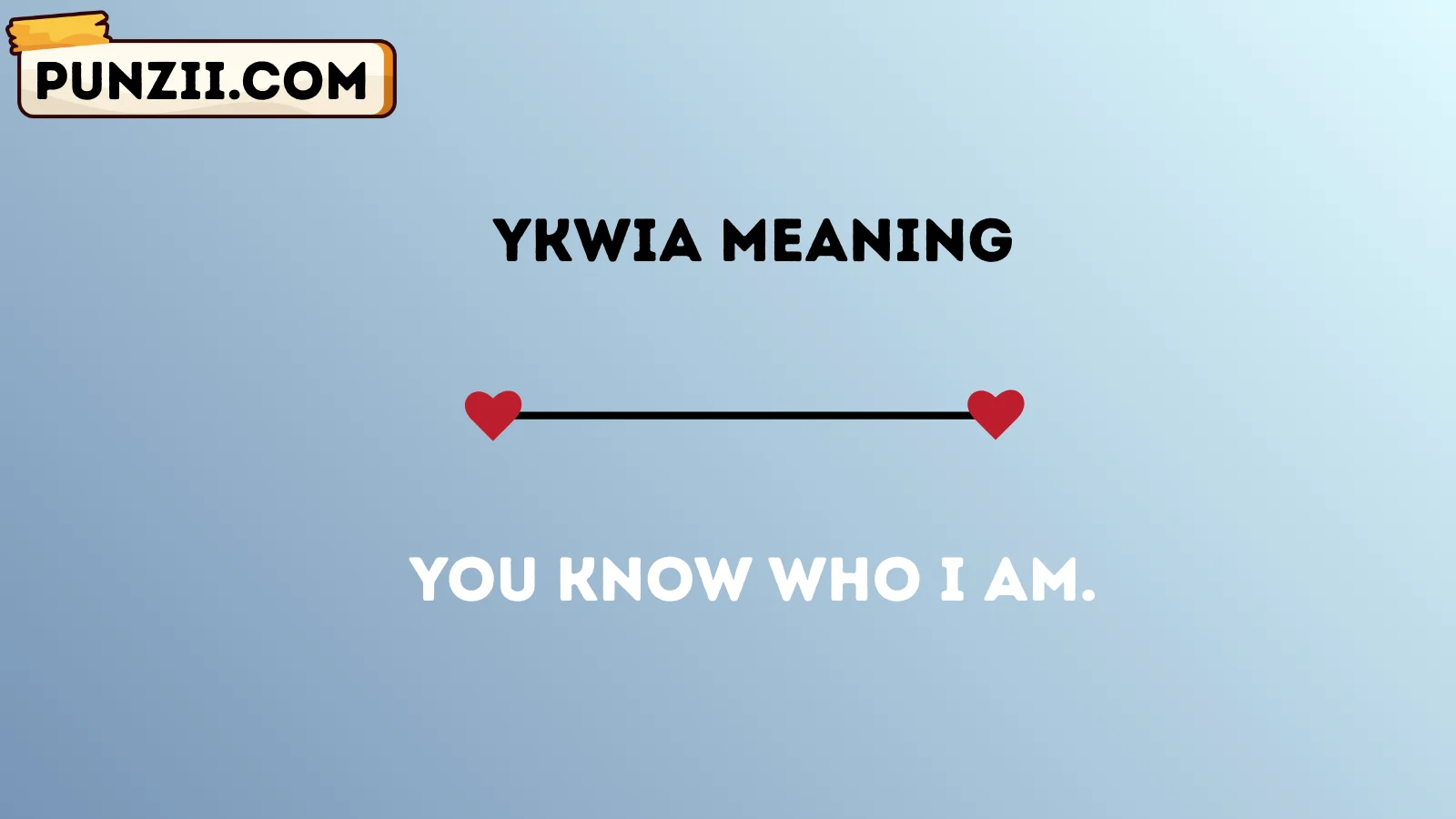
At its core, YKWIA typically stands for:
“You Know Who I Am.”
This phrase can carry multiple tones depending on how it’s used. In most cases, it suggests confidence, familiarity, or a playful sense of identity. For example:
- Someone might say it jokingly after doing something impressive.
- It can be used in a teasing way between friends.
- It may imply recognition without needing a formal introduction.
The phrase works as a conversational shortcut. Instead of explaining identity or reminding someone who they are, the speaker implies that their presence, personality, or reputation speaks for itself.
Tone matters significantly. It can sound:
- Confident
- Sarcastic
- Flirty
- Slightly arrogant (depending on delivery)
Without context, it can feel ambiguous. In text-based communication, where facial expressions and tone of voice are missing, readers may interpret it differently than intended.
In short, the meaning is straightforward, but its emotional impact depends heavily on the situation.
Background & History
Like many internet abbreviations, YKWIA likely developed from casual texting culture in the early 2010s, when character limits and fast communication encouraged shortened phrases. While it does not have a widely documented origin, its structure follows a common pattern used in online slang:
- YK = You Know
- W = Who
- I = I
- A = Am
This construction mirrors other popular abbreviations such as “IDK” (I Don’t Know) or “TBH” (To Be Honest). Social media platforms like Twitter (now X), Instagram, and messaging apps helped normalize this shorthand language.
Its popularity increased in online communities where identity, anonymity, and reputation matter—such as gaming forums, fan groups, and dating platforms. The phrase carries a subtle assertion of presence, which resonates in digital spaces where personal branding is common.
Although not as mainstream as other acronyms, it continues to circulate in niche online conversations.
Usage in Various Contexts
The meaning shifts slightly depending on where it appears:
1. Casual Texting
Among friends, it’s often playful. Example:
“I showed up late but still stole the show. YKWIA.”
2. Social Media
It may accompany selfies or confident captions. It implies recognition or self-assurance.
3. Gaming Communities
Used jokingly when a player makes a strong move or returns after being absent.
4. Dating Apps
It can suggest mystery or confidence, sometimes used to spark curiosity.
5. Arguments or Drama
In heated exchanges, it may sound confrontational, as if asserting dominance.
The key takeaway: the phrase adapts to tone and platform.
Common Misconceptions & Clarifications
Because it’s not universally known, misunderstandings happen frequently.
Misconception 1: It has a hidden negative meaning.
In most cases, it doesn’t. It’s usually neutral or playful.
Misconception 2: It’s always arrogant.
Not necessarily. Tone determines whether it sounds confident or cocky.
Misconception 3: It’s widely recognized.
Actually, many people still ask about it, which is why searches for the YKWIA meaning continue to grow.
Clarification: Context is everything. Without knowing the relationship between speakers, interpretation may vary.
Similar Terms & Alternatives
Several phrases carry a similar vibe:
- “You already know.”
- “Say less.”
- “It’s me.”
- “Guess who?”
- “I’m back.”
Each shares the theme of familiarity or self-recognition. However, they differ in tone. For instance, “You already know” feels more conversational, while YKWIA sounds slightly more declarative.
Choosing between them depends on your audience and communication style.
How to Respond to This Term
If someone sends YKWIA, your response should match their tone.
Playful Reply:
“Of course I do.”
Sarcastic Reply:
“Oh really? Remind me.”
Flirty Reply:
“Should I?”
Confused Reply:
“Wait, what do you mean?”
The safest approach is to mirror the mood of the conversation. If you’re unsure, asking for clarification avoids misunderstanding.
Regional or Cultural Differences
Digital slang spreads globally, but interpretation can vary:
- In Western online communities, it often signals confidence.
- In more formal cultures, it may seem overly bold.
- Non-native English speakers may find it confusing due to its compressed format.
In multilingual environments, abbreviations sometimes lose clarity because translation removes nuance.
Comparison with Similar Terms
Let’s compare it with closely related expressions:
| Term | Tone | Usage |
|---|---|---|
| YKWIA | Confident / Mysterious | Self-recognition |
| IDK | Neutral | Lack of knowledge |
| TBH | Honest / Direct | Giving opinion |
| YOLO | Bold / Carefree | Risk-taking attitude |
Unlike IDK or TBH, which communicate information, YKWIA communicates identity or presence.
Usage in Online Communities & Dating Apps
In online spaces, identity is often curated. Using this acronym can:
- Create intrigue
- Suggest confidence
- Signal insider humor
On dating apps, it may imply self-assuredness. However, overuse can appear try-hard. Subtlety works best.
In online communities, it can serve as a playful reminder of status or past achievements.
Hidden or Offensive Meanings
There is no widely recognized offensive meaning attached to YKWIA. However, tone can make it sound:
- Condescending
- Ego-driven
- Dismissive
If used aggressively, it may come across as confrontational. Intent and delivery matter.
Suitability for Professional Communication
This acronym is not recommended in formal or workplace communication.
Professional settings value clarity and professionalism. Abbreviations unfamiliar to everyone can create confusion or appear unprofessional.
Instead of using shorthand, write the full sentence when clarity matters.
FAQs:
What does YKWIA stand for?
It usually means “You Know Who I Am.”
Is YKWIA rude?
Not inherently, but tone can make it sound arrogant.
Is it commonly used?
It’s moderately used in online spaces but not mainstream.
Can it be flirty?
Yes, it can create playful mystery in casual chats.
Should I use it at work?
No, it’s best avoided in professional communication.
Does it have a hidden meaning?
There is no widely accepted hidden or offensive meaning.
Conclusion:
Understanding the YKWIA meaning helps prevent confusion in digital conversations. While simple in structure, its tone can shift depending on context.
It generally conveys confidence or familiarity but may be misunderstood if used carelessly. As with most online slang, awareness and audience sensitivity are key.
When in doubt, clarity always wins over clever abbreviations.

Root Pierce is a results-driven professional known for combining strategic insight with innovative thinking. With extensive experience in [insert industry, e.g., technology, business strategy, or marketing], Root specializes in developing solutions that drive growth, efficiency, and measurable impact. Renowned for a problem-solving mindset and collaborative approach, Root brings clarity, focus, and leadership to every project. His dedication to excellence, attention to detail, and forward-thinking strategies make him a trusted partner and influencer in professional environments.